Did you know that a well-supported deck can significantly extend its lifespan while enhancing safety? Understanding the nuances of concrete slab support is crucial for any successful deck project. Let's dive into the essential insights that can transform your approach to deck construction.
What You Will Learn
Concrete slab support systems are vital for distributing the weight of a deck, ensuring stability and longevity.
Key components of support systems include posts, beams, and joists, each playing a crucial role in maintaining structural integrity.
Regular inspections and maintenance can significantly prolong the lifespan of your deck support structure, helping to identify issues early.
Understanding the pros and cons of different deck support methods, such as Post and Footing versus Sleeper Systems, can guide you in making informed decisions for your project.
Comparing Deck Support Methods
Understanding the pros, cons, and costs of different deck support methods is essential for a durable and safe deck. Below is a comparison of Post and Footing vs. Sleeper Systems.
Post and Footing vs. Sleeper Systems Overview
Post and Footing
Sturdy and reliable
Ideal for uneven ground
Supports heavy loads
Sleeper Systems
Quicker installation
Lower material costs
Less excavation required
Post and Footing Details
Estimated Cost:
$50 - $100 per post
Cons:
More labor-intensive installation
Higher material costs
Sleeper Systems Details
Estimated Cost:
$30 - $70 per linear foot
Cons:
May not support heavy loads
Less durable over time
Understanding Concrete Slab Support for Decks
When it comes to building a durable deck, understanding concrete slab support is crucial. At Concrete Slab Innovations, we see how the right support system can make or break a project. Concrete slab support systems provide the foundation needed to ensure that your deck is not only stable but also long-lasting. Proper support is vital for maintaining not just structural integrity but also safety.
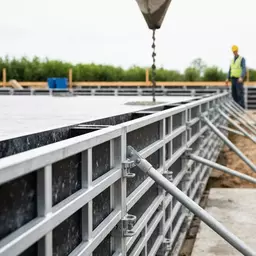
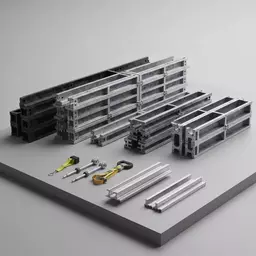
These systems typically involve the use of beams and posts that distribute the weight of the deck evenly across the slab. By utilizing innovative aluminum formwork systems, we can create supports that are lightweight yet robust, which simplifies the installation process and enhances structural integrity.
What is Concrete Slab Support?
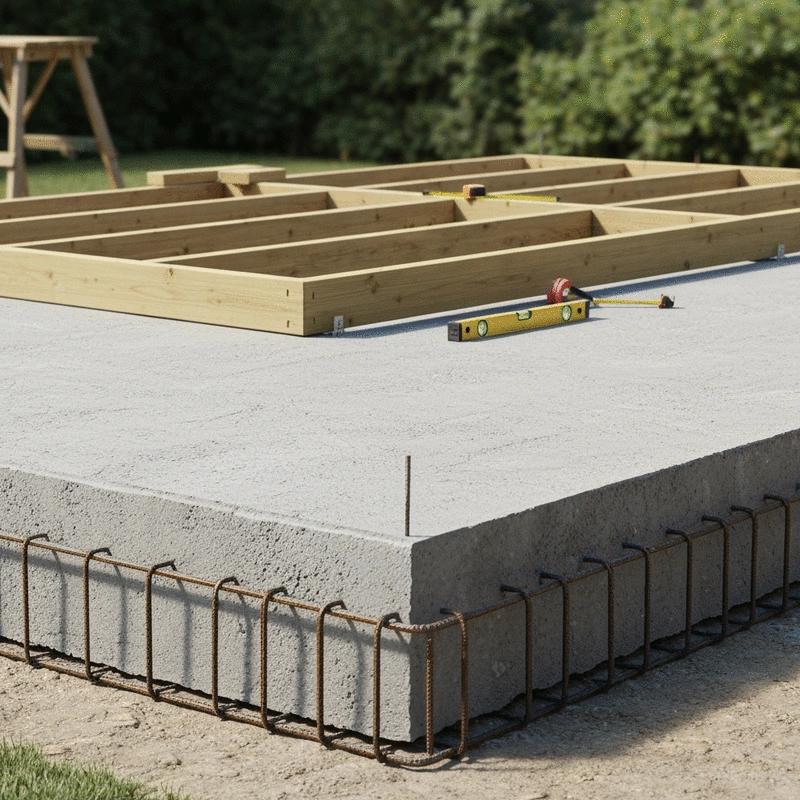
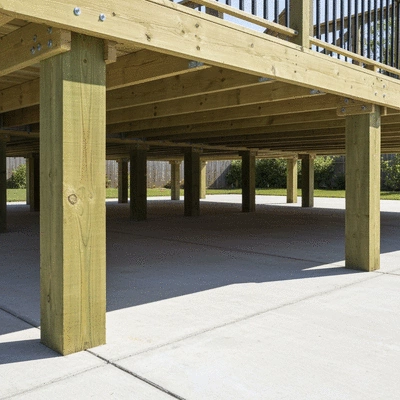
Concrete slab support refers to a framework designed to support a deck built over a concrete slab. This support system can include various components such as posts, beams, and joists, all working together to distribute loads effectively. With my experience in the construction industry, I've seen how vital proper support is for maintaining not just structural integrity but also safety.
Posts: Vertical supports that transfer the weight of the deck to the slab.
Beams: Horizontal supports that connect multiple posts and distribute loads.
Joists: Smaller beams that provide additional support and structure for the deck surface.
By understanding these components, contractors can create decks that are both attractive and functional. The right system can help avoid common issues like sagging or structural failure, which can lead to costly repairs down the line.
The Importance of Proper Deck Support
Selecting the right support method for your deck is essential for ensuring its longevity and safety. Poorly designed support systems can lead to serious problems, such as instability or collapse. As I often tell my clients, a solid deck starts with a solid foundation! Proper deck support not only improves the lifespan of the structure but also enhances usability.
Structural Integrity: Ensures that the deck can withstand loads, reducing the risk of damage.
Longevity: Quality support extends the life of your deck, minimizing the need for repairs.
Safety: A well-supported deck provides a safe environment for users, preventing accidents.
In my experience, investing in high-quality materials and support systems pays off in the long run, providing peace of mind while also enhancing the beauty of the property. For more detailed insights on the importance of robust support systems, particularly in large-scale applications, you might consult resources like those found on the ASCE Library. So, if you're considering a deck project, don't overlook the importance of a solid support structure!
Pro Tip
When selecting your concrete slab support system, consider the long-term impact of your materials. For instance, opting for aluminum formwork not only enhances structural integrity but also minimizes maintenance needs due to its resistance to rust and corrosion. This choice can lead to significant savings in both time and costs over the lifespan of your deck!
Maintaining Your Deck Support Structure
Maintaining your deck support structure is vital for ensuring its longevity and safety. Regular inspections can identify potential issues before they escalate, saving both time and money in the long run. Here are some best practices for maintaining concrete slab supports:
Regular Inspections: Check for signs of wear and tear, such as cracks or rust.
Cleaning Debris: Ensure that no leaves, dirt, or other debris are obstructing water drainage.
Weatherproofing: Apply sealants to protect your structure from moisture and UV damage.
Hardware Checks: Examine fasteners and anchors for corrosion and tightness.
By following these maintenance tips, you can extend the life of your deck support structure significantly. Remember, a well-maintained deck not only looks great but also adds value to your property!
Inspection Tips and Long-Term Maintenance
When it comes to long-term maintenance, establishing a routine inspection schedule is essential. I recommend checking your deck at least twice a year—once in the spring and again in the fall. This way, you can catch any potential problems early. Here are some specific areas to focus on during your inspections:
Inspect Concrete Slabs: Look for cracks or spalling, which can indicate underlying issues. For a deeper understanding of concrete durability and common issues, the American Concrete Institute provides extensive resources.
Check Post Stability: Ensure that posts are securely anchored and free from rot.
Evaluate Drainage Systems: Make sure that water flows freely and that no pooling occurs.
Look for Mold or Mildew: These can indicate moisture problems that may compromise your deck's integrity.
Implementing these inspection tips can help you maintain a safe and visually appealing deck. In my experience at Concrete Slab Innovations, I've seen how proactive maintenance can lead to long-term satisfaction with your outdoor spaces!
Troubleshooting Common Problems
Despite our best efforts, issues can sometimes arise with concrete slab deck supports. Here are some common problems you might encounter along with their solutions:
Creaking or Shaking Deck: This may indicate loose fasteners; tighten them or replace them as needed.
Uneven Surfaces: If your deck is not level, it may require additional shimming or adjustments to the posts.
Moisture Retention: If you notice standing water, consider installing additional drainage or adjusting the slope of your deck.
Rust or Corrosion: Replace any corroded hardware and apply rust-inhibiting treatments to prevent further damage.
Troubleshooting these common issues promptly can save you from more extensive repairs down the line. Remember, maintaining your deck support structure is not just about aesthetics; it's about ensuring the safety and longevity of your investment!
Comparing Deck Support Methods: Pros, Cons, and Costs
Post and Footing vs. Sleeper Systems
When selecting the right support method for your deck, understanding the pros, cons, and costs of each is crucial. Let’s break down Post and Footing versus Sleeper Systems:
Support Method
Pros
Cons
Estimated Cost
Post and Footing
Sturdy and reliable
Ideal for uneven ground
Supports heavy loads
More labor-intensive installation
Higher material costs
$50 - $100 per post
Sleeper Systems
Quicker installation
Lower material costs
Less excavation required
May not support heavy loads
Less durable over time
$30 - $70 per linear foot
As you can see, both methods have their advantages and drawbacks. Depending on your specific project requirements, the right choice might vary. It often comes down to balancing budget, structural needs, and the complexity of your site!
Choosing the Right Method for Your Needs
Choosing the right support system for your deck involves considering several factors. Here are some guidelines to help you make an informed decision:
Evaluate Your Site: Assess the condition and slope of the ground where your deck will be built.
Consider Your Budget: Determine how much you’re willing to invest in materials and labor.
Think About Load Requirements: Consider the intended use of the deck and the weight it will need to support.
Consult with Professionals: Don’t hesitate to reach out to construction experts for advice tailored to your specific project.
At Concrete Slab Innovations, we emphasize the importance of choosing a method that suits your unique needs. Remember, a well-supported deck is crucial for both structural integrity and your peace of mind!
Frequently Asked Questions About Deck Support
What is concrete slab support for decks?
Concrete slab support refers to the structural framework, typically involving posts, beams, and joists, designed to hold up a deck built over a concrete slab. Its main purpose is to distribute the deck's weight evenly, ensuring stability and longevity.
Why is proper deck support important?
Proper deck support is crucial for several reasons: it ensures structural integrity, extends the deck's lifespan by preventing issues like sagging or collapse, and most importantly, guarantees the safety of everyone using the deck.
What are the main components of a deck support system?
The main components include posts (vertical supports transferring weight to the slab), beams (horizontal supports connecting posts and distributing loads), and joists (smaller beams providing direct support for the deck surface).
What are the differences between Post and Footing and Sleeper Systems?
Post and Footing systems are sturdy, reliable, ideal for uneven ground, and support heavy loads, but are more labor-intensive and costly. Sleeper Systems offer quicker installation, lower material costs, and require less excavation, though they may not support heavy loads as well and can be less durable over time.
How often should I inspect my deck support structure?
It is recommended to inspect your deck support structure at least twice a year, ideally in the spring and fall, to identify any potential problems like cracks, rust, loose fasteners, or drainage issues early on.
Recap of Key Points
Here is a quick recap of the important points discussed in the article:
Concrete slab support is essential for building durable and stable decks.
Key components include posts, beams, and joists that distribute loads effectively.
Proper deck support enhances structural integrity, longevity, and safety.
Regular inspections and maintenance can significantly extend the life of your deck support structure.
Understanding different support methods, such as Post and Footing versus Sleeper Systems, helps in making informed decisions.
Consulting with professionals can provide tailored advice for your specific project needs.
Aidan Cromwell
Aidan Cromwell is a seasoned construction professional and industry expert with a passion for innovative building solutions. With extensive experience in concrete slab construction and a deep understanding of modular formwork systems, Aidan strives to educate and empower contractors, engineers, and project managers. His insights are grounded in practical knowledge and a commitment to advancing construction efficiency and safety.
Concrete Slab Innovations is dedicated to advancing concrete slab construction through innovative aluminum formwork systems. Our mission is to provide contractors, engineers, and project managers with cutting-edge methods for safe and precise slab support.
Optimize your concrete slab projects by integrating modular aluminum formwork. Its lightweight design significantly cuts down on labor and setup time!
Enhance project efficiency by understanding the high-load capacity of modern aluminum systems. This ensures structural integrity and faster pour cycles!
Reduce material costs and waste by choosing reusable aluminum formwork. A sustainable choice that also boosts your bottom line!
Prioritize job site safety with robust aluminum formwork. Its stable design minimizes risks during the critical concrete pouring phase.
Streamline your project timelines. Modular aluminum formwork allows for quicker assembly and dismantling, speeding up overall construction.
Achieve consistent slab quality through precise formwork alignment. High-quality systems ensure accurate dimensions and a superior finish.
Educate your team on the benefits of innovative formwork. A knowledgeable crew is crucial for maximizing efficiency and safety.
Explore case studies of successful projects utilizing advanced formwork. Learn from real-world applications to inform your next build.
Consider the long-term economic advantages of investing in quality formwork systems. Durability means less replacement and better ROI.
Implement rigorous quality control checks during formwork setup. Precision at this stage prevents costly rework later.
Stay updated on the latest advancements in concrete technology and formwork. Continuous learning keeps your projects cutting-edge.
Consult with formwork specialists to tailor solutions to your specific project needs. Custom approaches yield optimized results.
Document your formwork processes for consistency and training. Standardized procedures improve efficiency and reduce errors.
Regular maintenance of your formwork equipment extends its lifespan and ensures reliable performance on every job.
Ready to elevate your concrete slab projects? Dive into our resources to discover how innovative formwork can transform your construction practices!