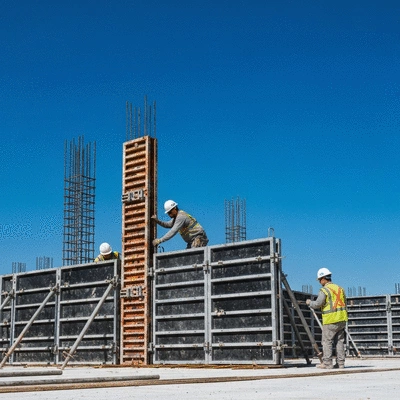
Material Weight & Handling
Lightweight
Aluminum
Heavy
Traditional
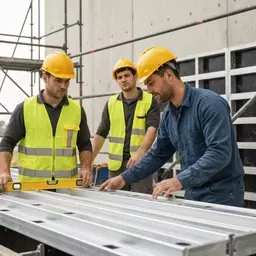
Aluminum is significantly lighter, simplifying handling and reducing labor.
What if the way we build could significantly impact our planet's future? Embracing aluminum formwork not only revolutionizes construction but also paves the way for sustainable practices that could greatly reduce our carbon footprint.
This visual highlights the key environmental benefits of aluminum formwork compared to traditional methods in construction.
Aluminum
Traditional
Aluminum is significantly lighter, simplifying handling and reducing labor.
Aluminum
Traditional
Aluminum's reusability drastically minimizes on-site construction waste.
Aluminum
Traditional
Aluminum resists warping, allowing for repeated use across many projects.
Aluminum
Traditional
Aluminum can be repurposed into new products, reducing demand for virgin resources.
As we look towards a sustainable future in construction, the role of aluminum formwork cannot be overstated. This innovative system offers a practical solution to the challenges posed by traditional methods, especially in terms of reducing our carbon footprint. In this section, we will delve into the mechanics of aluminum formwork and explore its significant environmental benefits, paving the way for a greener approach to concrete slab construction.
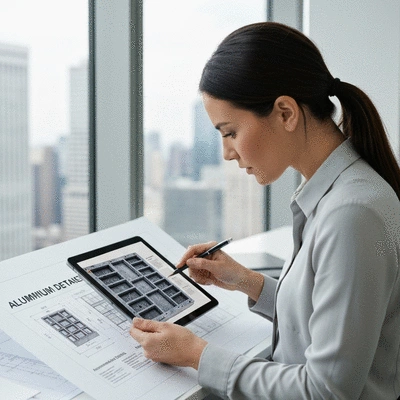
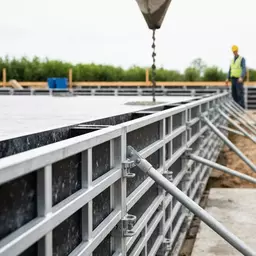
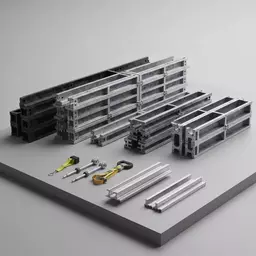
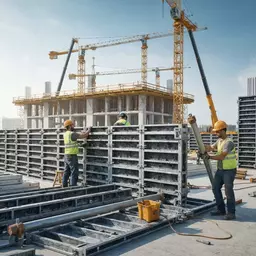
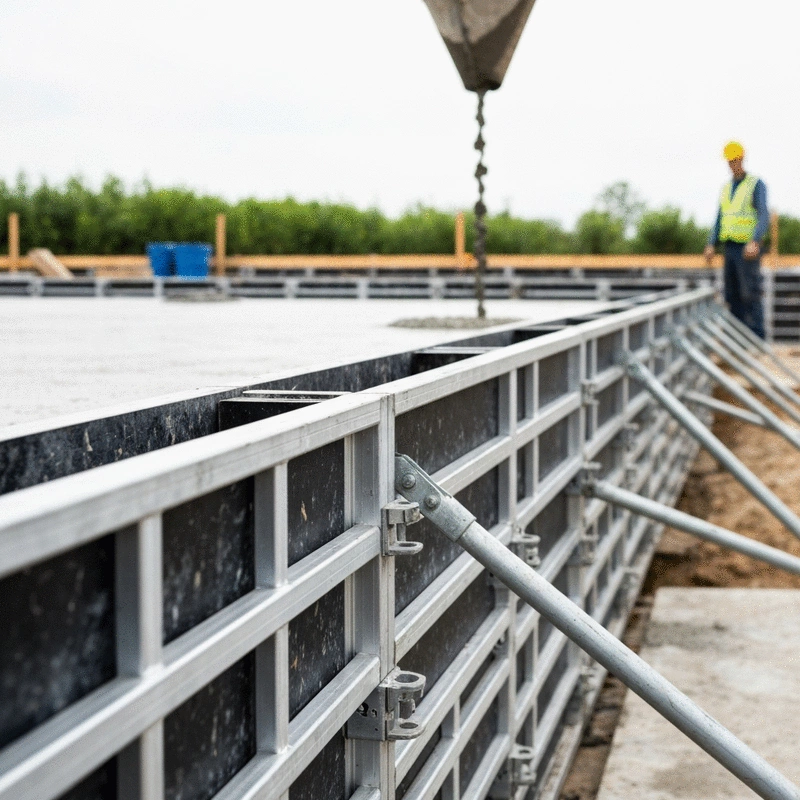
Aluminum formwork is a system designed for the efficient pouring of concrete, offering a lightweight and durable alternative to traditional materials. It consists of modular panels that are easily assembled on-site, allowing for a fast and efficient construction process. The key advantage? Its efficiency not only speeds up the project timeline, but it also minimizes labor and material costs.
At Concrete Slab Innovations, we appreciate how this technology streamlines the construction workflow. By using aluminum, contractors can achieve higher precision in slab pouring, ensuring consistent quality throughout the project. This precision translates not just into visible improvements in structural integrity but also plays a vital role in reducing waste.
When comparing aluminum formwork to traditional systems, the differences are striking. Here are some key points:
The transition from traditional formwork to aluminum systems represents a crucial shift towards sustainability. As we adopt these innovative methods, not only are we enhancing construction efficiency, but we are also taking a stand against environmental degradation.
One of the most compelling reasons to switch to aluminum formwork is its zero construction waste approach. Unlike traditional materials, which often lead to leftover waste that ends up in landfills, aluminum systems can be reused for multiple projects. This means less waste and a lesser environmental impact overall, aligning with the principles of responsible construction as detailed by Alchary.
For contractors aiming to enhance their sustainability profile, using aluminum formwork is a game-changer. It aligns perfectly with our mission at Concrete Slab Innovations to promote practices that not only improve efficiency but also contribute positively to the environment. By implementing this technology, we can significantly reduce the ecological footprint of our constructions.
Aluminum's inherent properties also lend themselves well to reusability and recyclability. An aluminum formwork system can be repurposed for numerous projects without losing its structural integrity. This lifecycle benefit reduces the need for new materials, which is a significant factor in minimizing our carbon emissions during construction, as highlighted by resources like Fommec.
Moreover, at the end of its life cycle, aluminum can be fully recycled. This means that the materials can be transformed into new products, further reducing the demand for virgin resources. Imagine the potential for lowering your project's carbon footprint just by choosing the right formwork system!
Aluminum formwork is not only about functionality—it also embodies the principles of green building materials. By utilizing aluminum, we are actively participating in the shift towards more sustainable construction practices. This transition is crucial for both current projects and the future of the construction industry, supporting broader embodied carbon strategies that focus on material selection and lifecycle impacts, as discussed by the Net Zero Carbon Guide.
In essence, adopting aluminum formwork helps us make strides toward a more sustainable future. With a focus on reducing waste and energy consumption, we at Concrete Slab Innovations are committed to paving the way for environmentally responsible building practices.
To maximize the benefits of aluminum formwork, consider integrating sustainable practices such as using local materials and minimizing transportation distances. This synergy not only enhances your project’s efficiency but also further reduces its carbon footprint.
At Concrete Slab Innovations, we truly believe that the future of construction lies in sustainable practices. As we explore how aluminum formwork can significantly reduce carbon footprints, it's essential to recognize the innovations shaping our industry. The shift towards using environmentally friendly materials not only benefits the planet but can also lead to cost savings and enhanced efficiency on your projects.
In this ever-evolving landscape, we are witnessing exciting trends that promise to redefine the way we approach concrete slab construction. By embracing sustainable solutions, we pave the way for a greener, more efficient building sector!
As we look ahead, the potential of aluminum formwork to cut down carbon emissions is substantial. Here are some emerging trends and innovations in sustainable construction:
By adopting these advancements, contractors and engineers can not only meet but exceed sustainability goals, reducing their projects' environmental impact while ensuring quality.
Advocating for aluminum formwork isn't just about presenting its benefits; it's about demonstrating its practicality and effectiveness in real-world applications. Here are some steps to help you promote its use:
By following these strategies, you can effectively champion aluminum formwork as a viable option for modern construction projects.
Building Information Modeling (BIM) is revolutionizing the construction industry by enhancing collaboration and efficiency. When it comes to promoting sustainability, BIM plays a crucial role:
Utilizing BIM technology not only aids in achieving sustainability goals but also streamlines the construction process, making it indispensable in modern building practices.
As industry professionals, we have a responsibility to advocate for sustainable construction practices. Let's work together to create a positive impact on our environment! At Concrete Slab Innovations, we are dedicated to sharing knowledge and resources that can guide our community towards greener building solutions.
Connecting with other professionals and initiatives can amplify our impact. Here are a few ways to engage:
By actively participating in these communities, we can collectively push for widespread adoption of aluminum formwork and other sustainable methods!
Expanding your knowledge on low-carbon technologies is vital for effective advocacy. Here are some resources to consider:
Utilizing these resources will empower you and your teams to make informed decisions that favor sustainability.
Achieving LEED certification is a fantastic way to demonstrate your commitment to sustainability. Here are some strategies to help you on this journey:
By implementing these strategies, you’ll not only enhance your project’s sustainability but also contribute to a greener construction industry!
Here is a quick recap of the important points discussed in the article:
Aidan Cromwell is a seasoned construction professional and industry expert with a passion for innovative building solutions. With extensive experience in concrete slab construction and a deep understanding of modular formwork systems, Aidan strives to educate and empower contractors, engineers, and project managers. His insights are grounded in practical knowledge and a commitment to advancing construction efficiency and safety.