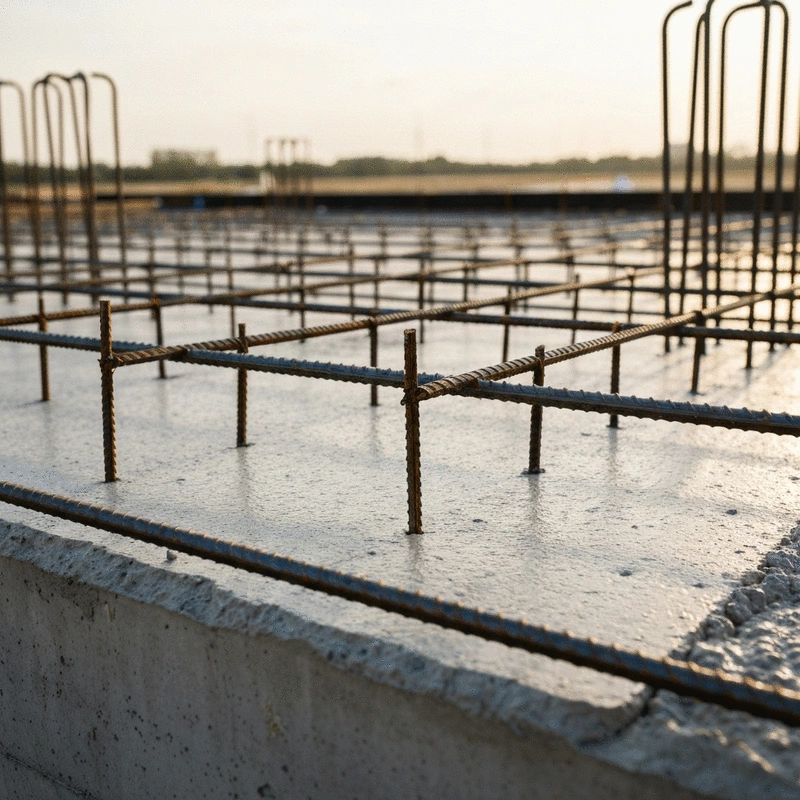
In the world of concrete construction, understanding the significance of proper rebar spacing could be the difference between a durable structure and a costly failure. How well do you know the role of rebar in ensuring your concrete slabs are built to last?
Proper rebar spacing minimizes cracking due to shrinkage and temperature changes, ensuring structural integrity.
Factors like load types, environmental conditions, and slab thickness are critical for determining appropriate rebar spacing.
Following ACI guidelines for rebar spacing and placement helps maintain compliance and enhances the longevity of your concrete structures.
Rebar Spacing Guidelines for Concrete Slabs
The proper spacing of rebar is crucial for the strength and durability of concrete structures. Below are recommended guidelines for various applications and ACI standards.
Recommended Spacing for Structures
Driveways & Parking Areas
Typically 12 inches on center for even weight distribution.
Foundation Slabs
Often 16 inches on center to handle building loads.
Wall & Ceiling Slabs
Generally 12 to 18 inches on center, adjustable to engineering.
ACI Minimum Standards
Minimum Rebar Diameter
Based on slab thickness for structural integrity.
Maximum Spacing Limit
Typically not exceeding 18 inches for most applications.
Overlap Requirements
Crucial for load-bearing capacity and structural continuity.
The Importance of Proper Rebar Spacing in Concrete Slabs
When it comes to concrete slab construction, one of the most critical aspects is the proper spacing of rebar. You might wonder why this is so essential. Well, rebar plays a vital role in enhancing the overall strength and durability of concrete structures, and understanding its function can significantly impact your project's success!
As someone deeply involved in the construction industry, I can tell you that getting rebar spacing right is not just about compliance; it’s about ensuring the longevity and reliability of the structure you're building. Let’s dive into the importance of rebar in concrete slabs!
Understanding the Role of Rebar in Concrete Structures
Rebar, or reinforcing bar, is essentially the backbone of any concrete structure. It helps improve tensile strength, which concrete lacks on its own. Here’s why rebar is indispensable:
Minimizes Cracking: Properly placed rebar helps mitigate cracking caused by shrinkage and temperature changes.
Improves Structural Integrity: It reinforces the concrete, making it more resistant to various stresses.
In my experience at Concrete Slab Innovations, I’ve seen how a well-placed rebar can extend the lifespan of a slab significantly. Understanding its role can empower you to make informed decisions during your projects.
How Concrete Slab Rebar Spacing Affects Strength and Durability
The spacing of rebar is just as important as its presence. If the rebar is spaced too far apart, the concrete may crack or fail under stress. As outlined by the National Ready Mixed Concrete Association (NRMCA), proper rebar placement is crucial for effective load distribution. Consider these factors regarding spacing:
Load Types: Different structures have varied load requirements that dictate how closely rebar should be spaced.
Environmental Conditions: Areas prone to heavy rainfall or freeze-thaw cycles might require tighter spacing to accommodate stress.
Thickness of the Slab: Thicker slabs can often handle wider spacing, while thinner slabs need closer rebar placement.
With my background in modular design and high-load engineering, I can assure you that understanding these nuances will greatly enhance your construction practices.
The Impact of Rebar on Structural Integrity and Load-Bearing Capacity
The integrity of a concrete slab hinges on the careful placement of rebar. A well-thought-out rebar layout not only aids in stress distribution but also boosts the load-bearing capacity of the slab. Here’s what to keep in mind:
Uniform Load Distribution: Proper spacing helps ensure that loads are evenly spread across the slab, preventing weak spots.
Resistance to Shear Forces: Adequate rebar placement enhances the slab's ability to resist shear forces that can lead to structural failure.
Long-Term Performance: Proper rebar spacing ensures that the structure performs well over time, reducing maintenance costs.
At Concrete Slab Innovations, we advocate for a deep understanding of these principles. The right rebar spacing can transform your approach to concrete slab construction and lead to better project outcomes.
Interactive Poll: Your Experience Matters!
Have you encountered issues related to rebar spacing in your concrete projects? Share your thoughts below and help us understand the common challenges in the industry:
Frequently Asked Questions About Rebar Spacing
Q1: Why is proper rebar spacing critical in concrete slabs?
A1: Proper rebar spacing is crucial because it enhances the concrete slab's load-bearing capability by distributing loads evenly, minimizes cracking due to shrinkage and temperature changes, and improves overall structural integrity, preventing costly failures.
Q2: What is the recommended rebar spacing for driveways and parking areas?
A2: For driveways and parking areas, the recommended rebar spacing is typically 12 inches on center. This helps in evenly distributing the weight of vehicles and preventing cracking.
Q3: How do ACI guidelines relate to rebar spacing?
A3: The American Concrete Institute (ACI) provides essential guidelines that recommend minimum rebar diameter based on slab thickness, specify maximum spacing limits (typically not exceeding 18 inches), and outline crucial overlap requirements for load-bearing capacity and structural continuity. Adhering to these guidelines ensures compliance and enhances structural integrity.
Q4: What factors influence rebar spacing?
A4: Several factors influence rebar spacing, including the types of loads the structure will bear, environmental conditions (like heavy rainfall or freeze-thaw cycles), and the thickness of the concrete slab. Thicker slabs might allow for wider spacing, while thinner ones require closer placement.
Q5: Should local building codes be considered for rebar spacing?
A5: Yes, it is very important to consider regional variations and local building codes. Climate and soil conditions can affect rebar spacing requirements, so always check local regulations to ensure compliance, safety, and the longevity of your construction.
Guidelines for Concrete Slab Rebar Spacing
When it comes to achieving high-quality concrete slabs, understanding rebar spacing is critical. Proper spacing not only ensures that your slabs have maximum strength but also extends their longevity. Whether you’re working on driveways, foundations, or walls, having a clear guideline can significantly impact your project’s success.
In my experience at Concrete Slab Innovations, I’ve seen firsthand how adhering to established rebar spacing guidelines can prevent a host of structural issues down the line. Let's dive into the specifics of spacing for various structures.
Recommended Rebar Spacing for Different Structures
Different structures have unique requirements when it comes to rebar spacing. As discussed by the Concrete Reinforcing Steel Institute (CRSI), these recommendations ensure specific load-bearing capabilities. Here are some general recommendations:
Driveways and Parking Areas: Typically, rebar spacing should be set at 12 inches on center.
Foundation Slabs: A spacing of 16 inches on center is often recommended for residential foundations.
Wall and Ceiling Slabs: Here, the spacing can vary but generally falls between 12 to 18 inches on center.
These guidelines are essential to ensure that each type of slab can withstand the specific loads and stresses it will encounter. Failing to follow them can lead to cracks and structural failure, which no one wants to face!
Rebar Spacing in Driveways and Parking Areas
For driveways and parking areas, I recommend a spacing of around 12 inches on center. This tight spacing helps distribute the weight of vehicles evenly, preventing cracking. Remember, the thicker the slab, the more robust the rebar should be, which plays a big role in durability!
Rebar Requirements for Foundation Slabs
Foundation slabs are the backbone of any structure, so getting the rebar spacing right is essential. A common practice is to use a spacing of 16 inches on center. This approach ensures that the foundation can handle the load of the building without compromising strength.
Spacing Guidelines for Wall and Ceiling Slabs
Wall and ceiling slabs usually have more variability in spacing. Typically, I advise a range of 12 to 18 inches on center. This flexibility allows for adjustments based on the specific engineering requirements of the project, ensuring that you’re covered no matter the scenario.
Minimum Standard Rebar Spacing According to ACI
The American Concrete Institute (ACI) provides essential guidelines for rebar spacing that help maintain consistency and safety in construction practices. Following these standards can save you a lot of trouble in the long run!
Minimum Rebar Diameter: ACI guidelines typically recommend a minimum diameter for rebar based on the slab thickness.
Spacing Limitation: They often specify maximum spacing that shouldn’t exceed 18 inches for most structural applications.
Overlap Requirements: Ensure that the rebar overlaps properly according to ACI standards, which is crucial for load-bearing capacity.
Sticking to these ACI guidelines can enhance the structural integrity of your slabs and ensure compliance with building codes.
Understanding ACI Guidelines for Rebar Placement
The ACI guidelines are straightforward yet thorough. They outline various factors influencing rebar placement, including exposure conditions and the type of structure. Familiarizing yourself with these guidelines can help you avoid costly mistakes!
Regional Variations and Local Code Compliance Considerations
It’s important to recognize that regional variations in climate and soil conditions can affect rebar spacing. Always check local codes to ensure compliance. Adapting to these local requirements not only ensures safety but can also enhance the longevity of your construction.
Design Specifications and Building Code Requirements for Rebar Spacing
Following specific design specifications is key to achieving compliance with building code requirements. Each project might have unique aspects that require adjustments in rebar spacing, so make sure to discuss these during your planning phase!
Recap of Key Points
Here is a quick recap of the important points discussed in the article:
Role of Rebar: Rebar enhances the load-bearing capacity, minimizes cracking, and improves the structural integrity of concrete slabs.
Importance of Proper Spacing: Correct rebar spacing is crucial for distributing loads evenly and preventing cracking or failure under stress.
Guidelines for Spacing: Recommended rebar spacing varies by structure, with 12 inches on center for driveways and 16 inches for foundation slabs.
ACI Standards: Following ACI guidelines ensures proper rebar diameter, spacing limitations, and overlap requirements to maintain structural integrity.
Regional Considerations: Always check local codes and adapt rebar spacing based on regional climate and soil conditions for optimal performance.
Aidan Cromwell
Aidan Cromwell is a seasoned construction professional and industry expert with a passion for innovative building solutions. With extensive experience in concrete slab construction and a deep understanding of modular formwork systems, Aidan strives to educate and empower contractors, engineers, and project managers. His insights are grounded in practical knowledge and a commitment to advancing construction efficiency and safety.

Concrete Slab Innovations is dedicated to advancing concrete slab construction through innovative aluminum formwork systems. Our mission is to provide contractors, engineers, and project managers with cutting-edge methods for safe and precise slab support.
Optimize your concrete slab projects by integrating modular aluminum formwork. Its lightweight design significantly cuts down on labor and setup time!
Enhance project efficiency by understanding the high-load capacity of modern aluminum systems. This ensures structural integrity and faster pour cycles!
Reduce material costs and waste by choosing reusable aluminum formwork. A sustainable choice that also boosts your bottom line!
Prioritize job site safety with robust aluminum formwork. Its stable design minimizes risks during the critical concrete pouring phase.
Streamline your project timelines. Modular aluminum formwork allows for quicker assembly and dismantling, speeding up overall construction.
Achieve consistent slab quality through precise formwork alignment. High-quality systems ensure accurate dimensions and a superior finish.
Educate your team on the benefits of innovative formwork. A knowledgeable crew is crucial for maximizing efficiency and safety.
Explore case studies of successful projects utilizing advanced formwork. Learn from real-world applications to inform your next build.
Consider the long-term economic advantages of investing in quality formwork systems. Durability means less replacement and better ROI.
Implement rigorous quality control checks during formwork setup. Precision at this stage prevents costly rework later.
Stay updated on the latest advancements in concrete technology and formwork. Continuous learning keeps your projects cutting-edge.
Consult with formwork specialists to tailor solutions to your specific project needs. Custom approaches yield optimized results.
Document your formwork processes for consistency and training. Standardized procedures improve efficiency and reduce errors.
Regular maintenance of your formwork equipment extends its lifespan and ensures reliable performance on every job.
Ready to elevate your concrete slab projects? Dive into our resources to discover how innovative formwork can transform your construction practices!