Defining Aluminum Formwork
Modular system for concrete support, lightweight yet robust. Simplifies logistics and enhances safety.
- Lightweight design
- High-load capacity
- Modular components
What if understanding load distribution could prevent costly failures in your construction projects? The insights gained from aluminum post-and-beam formwork systems can drastically enhance safety and efficiency. Let's take a closer look at some key lessons from this topic.
This visual summarizes the key aspects of aluminum post-and-beam formwork, highlighting its definition, the importance of load distribution analysis, and the core principles of load-bearing capacity. Each section emphasizes critical elements for structural integrity and project efficiency.
Modular system for concrete support, lightweight yet robust. Simplifies logistics and enhances safety.
Critical for safety, preventing failures, and ensuring compliance with standards.
Understanding material strength, load types (static/dynamic), and formwork configuration.
Expected to gain traction due to lightweight, durability, and enhanced load distribution capabilities.
In the realm of concrete slab construction, grasping the concept of load distribution is vital. Aluminum post-and-beam formwork has gained traction for its efficiency and safety, transforming how we approach structural integrity. But what does load distribution mean in this context? It refers to how loads are spread out across the formwork system, ensuring that the weight of the concrete and any additional loads are adequately supported. Understanding this principle is essential for achieving optimal performance during slab pouring.
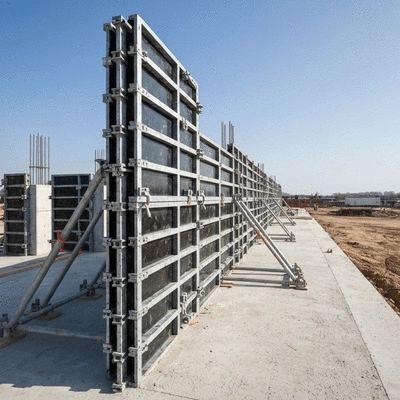
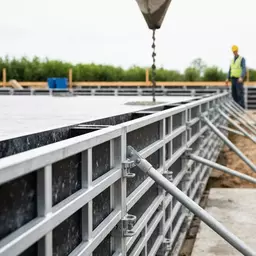
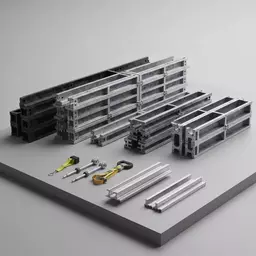
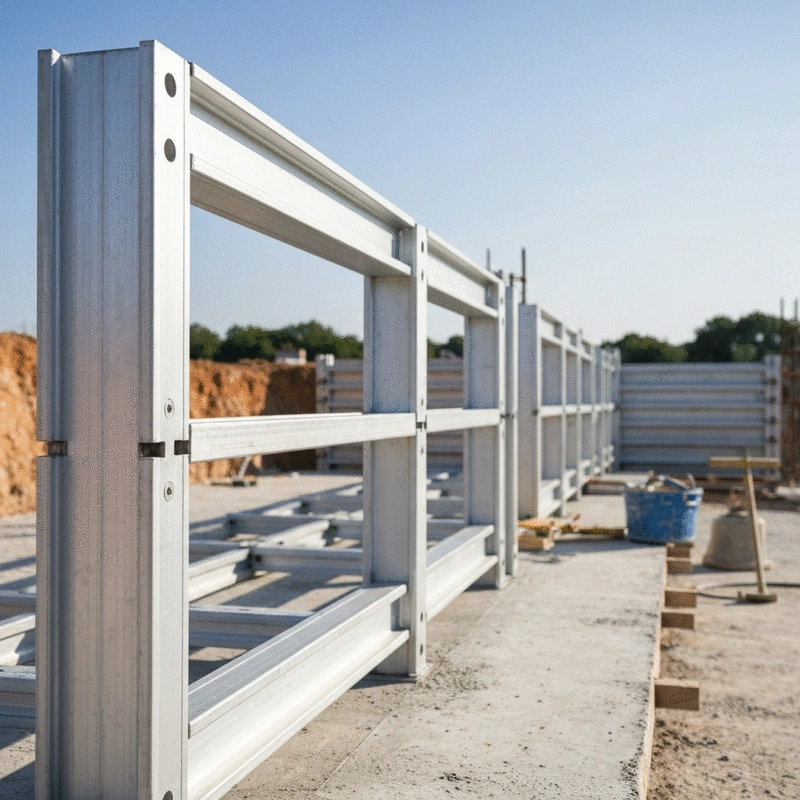
Aluminum post-and-beam formwork is a modular construction system designed to support concrete during the curing process. Unlike traditional formwork, which can be heavy and cumbersome, aluminum systems are lightweight yet robust, making them easier to handle and assemble. These systems contribute significantly to the growing aluminum formwork system market due to their efficiency and safety benefits. They consist of aluminum panels and posts that create a strong framework, allowing for high-load capacity while maintaining structural integrity. This modular approach not only simplifies logistics on-site but also enhances safety for the construction crew.
By adopting aluminum post-and-beam formwork, contractors can reduce setup times and labor costs while increasing overall project efficiency. This formwork system aligns perfectly with our mission at Concrete Slab Innovations—to provide cutting-edge solutions that empower professionals in the construction industry.
Load distribution analysis is critical in ensuring that a structure can safely bear various loads over its lifespan. It helps prevent failures that could arise from uneven load distribution, which may lead to costly repairs or even catastrophic collapses. In my years of experience, I've witnessed how a thorough understanding of load distribution can significantly impact project outcomes. For instance, performing a detailed analysis allows engineers to identify potential weaknesses in the formwork system and make necessary adjustments before construction begins. The increasing adoption of these systems is reflected in reports such as the aluminium formwork system market analysis, highlighting their growing importance.
As we continue to advance the field of concrete slab construction, load distribution analysis must remain a focal point. Not only does it enhance safety, but it also ensures that projects meet the rigorous demands of modern construction.
Understanding the key principles of load-bearing capacity is essential for any contractor or engineer working with formwork systems. These principles include material strength, load types, and the overall configuration of the formwork. For aluminum systems, the material's lightweight nature does not compromise its strength; in fact, it can often outperform traditional materials under certain conditions. This strength and efficiency are key drivers behind the continued growth, as detailed in various aluminum formwork system market reports.
By applying these principles, professionals can design formwork systems that not only support the expected loads but also enhance the safety and longevity of the construction. At Concrete Slab Innovations, we focus on these key principles to ensure our solutions are both innovative and reliable, empowering you to achieve success in your projects.
To enhance the effectiveness of your load distribution analysis, consider utilizing advanced modeling software. Tools such as finite element analysis (FEA) can simulate how your aluminum formwork will respond under different load conditions, allowing for precise adjustments and optimizing safety measures before the actual construction begins.
As we wrap up our discussion, it’s clear that load distribution analysis plays a pivotal role in ensuring the safety and efficiency of aluminum post-and-beam formwork systems. Understanding how loads are distributed across formwork not only enhances structural integrity but also minimizes risks associated with construction projects. This analysis is essential for contractors and engineers alike, as it helps in making informed decisions that ultimately lead to successful project outcomes.
Moreover, the insights we've gathered emphasize the need for robust evaluation methods, such as finite element simulations and static testing. These methodologies are crucial for predicting how formwork will behave under various conditions, ensuring that we can rely on the materials and designs we choose. Let’s summarize some of the key takeaways:
Incorporating these principles into your projects will not only improve efficiency but also set a solid foundation for safe construction practices. The future of aluminum formwork systems looks promising, and by embracing these insights, we can stay ahead in this evolving industry.
Looking ahead, I believe that aluminum formwork systems will continue to gain traction. Their lightweight yet durable properties, along with enhanced load distribution capabilities, make them a superior choice compared to traditional materials. As we innovate and adapt to new construction challenges, incorporating these systems will be essential for optimizing workflows and ensuring safety on-site.
At Concrete Slab Innovations, we are committed to providing the latest information and resources on aluminum formwork systems. I encourage you to explore these options to elevate your construction projects. The advancements in technology and design principles are just the beginning—there’s so much more on the horizon!
If you’re ready to enhance your construction practices with aluminum formwork, don’t hesitate to reach out! Our team at Concrete Slab Innovations is here to offer expert consultation tailored to your specific needs. Let’s discuss how we can support your projects with innovative solutions that ensure efficiency and quality.
To stay informed about the latest trends and developments in aluminum formwork systems, follow our blog and subscribe to our newsletter. We regularly share insights, case studies, and best practices that can help you navigate the evolving landscape of construction. Together, we can push the boundaries of what’s possible in our industry!
Here is a quick recap of the important points discussed in the article:
Aidan Cromwell is a seasoned construction professional and industry expert with a passion for innovative building solutions. With extensive experience in concrete slab construction and a deep understanding of modular formwork systems, Aidan strives to educate and empower contractors, engineers, and project managers. His insights are grounded in practical knowledge and a commitment to advancing construction efficiency and safety.