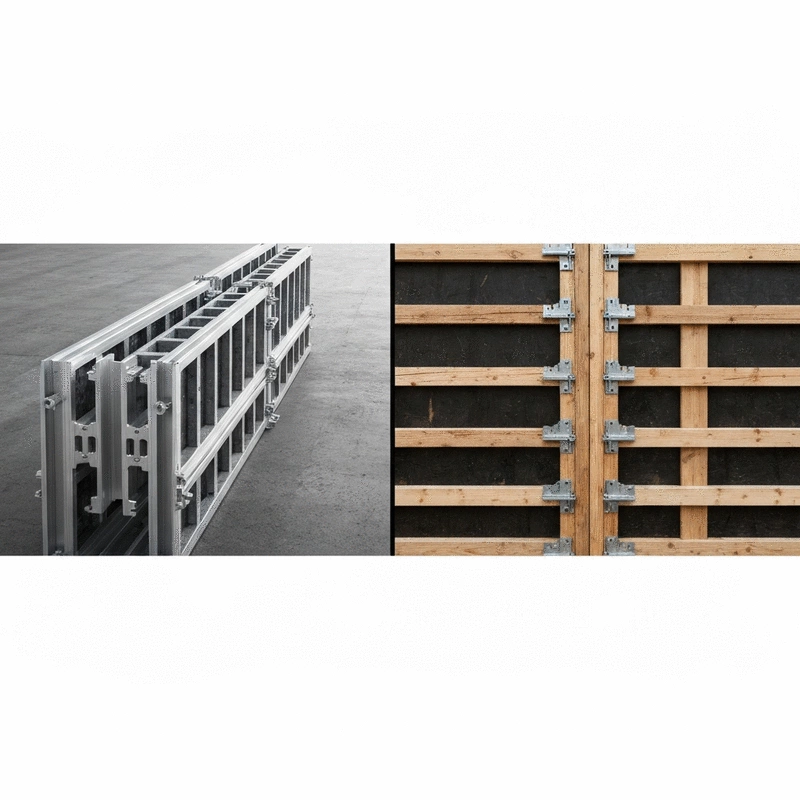
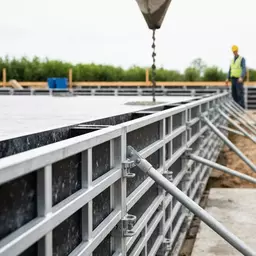
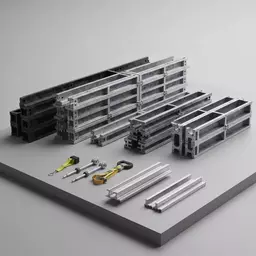
In the evolving world of construction, the debate between traditional timber and innovative aluminum formwork is heating up. With aluminum formwork offering lightweight and durable solutions, could it be the key to enhancing your project efficiency and safety?
What You Will Learn
Aluminum formwork systems are lightweight, durable, and reusable, leading to significant cost savings over time.
Enhanced safety and efficiency in construction can be achieved with aluminum, especially for large-scale projects.
Traditional timber remains a viable option for smaller projects due to its availability and cost-effectiveness.
Understanding the strengths and limitations of both materials is crucial for making informed construction choices.
Comparative Analysis: Aluminum Formwork vs. Traditional Timber
This comparison highlights the key differences and benefits of aluminum formwork systems and traditional timber methods in construction.
Aluminum Formwork
Lightweight & High Load Capacity: Easier handling, supports substantial loads for high-rise.
High Reusability: Reduces long-term costs, sustainable.
Reduced Labor Costs & Time Efficiency: Quick assembly/disassembly, faster construction.
Readily Available: Easy to source for immediate needs.
Cost-Effective for Small Projects: Lower initial material cost.
Flexibility: Can be cut and shaped for custom designs.
Limitations: Vulnerable to warping, weather, higher maintenance.
Ideal for: Smaller or custom projects.
ROI Calculator for Budgeting
Input Project Specs: Enter material choices & project details.
Analyze Projected Costs: Include labor, time, maintenance.
Evaluate Savings: Compare aluminum vs. timber long-term.
Refine with Quotes: Gather accurate supplier & contractor estimates.
Goal: Make informed financial decisions.
Evaluating Project Needs
Case Studies Insights:
Project scope & challenges.
Materials used & rationale.
Outcomes (time saved, safety).
Market Trends:
Sustainable materials (aluminum).
Advanced formwork design.
Modular construction & efficiency.
Outcome: Guide decisions, prepare for challenges.
Understanding Aluminum Formwork and Traditional Timber: A Comprehensive Overview
In today’s construction landscape, the choice of formwork can significantly impact project efficiency and safety. So, what exactly are aluminum formwork systems? Let’s dive into this innovative solution alongside traditional timber methods and explore their unique features and applications.
What is Aluminum Formwork?
Aluminum formwork is a construction system made from lightweight aluminum panels. Designed for easy assembly, it allows for quick and efficient pouring of concrete slabs. Unlike traditional timber formwork, aluminum offers enhanced durability and reusability, making it an attractive option for many construction projects.
Lightweight Design: Aluminum is significantly lighter than timber, making it easier to handle and transport.
High Load Capacity: Despite its lightness, aluminum can support substantial loads, ideal for high-rise buildings.
Reusability: With proper care, aluminum formwork can be reused multiple times, reducing costs over the long term.
Reduced Labor Costs: The quick assembly and disassembly of aluminum systems cut down on labor time.
These features position aluminum formwork as a game-changer in construction efficiency, particularly for slab projects where time and safety are paramount. Wouldn’t it be fantastic to see your project completed faster and with fewer complications? For a deeper understanding of how these systems compare in terms of cost-efficiency and construction time in high-rise buildings, delve into this comparative analysis of formwork systems.
Key Features and Benefits of Using Aluminum in Construction
The benefits of aluminum formwork extend beyond just its physical properties. For instance, its insulated design can help maintain the temperature of the concrete during curing, leading to better strength and integrity. This is especially crucial for projects involving large slabs, where temperature control is vital. For more detailed insights into formwork construction engineering and design, the National Institute of Standards and Technology (NIST) provides comprehensive publications.
Moreover, using aluminum formwork contributes to a cleaner job site. As a contractor, I’ve noticed that its modular nature minimizes waste, allowing teams to focus more on construction rather than cleanup. This not only enhances productivity but also fits into a broader vision of sustainability in the construction industry.
The Role of Traditional Timber in Construction Projects
While aluminum formwork has gained popularity, traditional timber still plays a significant role in construction. Timber formwork is often chosen for its availability and ease of use, especially in smaller or less complex projects. Many contractors, including myself, have relied on timber for its familiarity and adaptability.
Readily Available: Timber is usually easy to source, making it a go-to choice for immediate projects.
Cost-Effective: For smaller projects, timber can be more affordable than aluminum.
Flexibility: Timber can be cut and shaped to fit unique project requirements, especially for custom designs.
However, it’s important to consider the limitations of timber as well. Over time, wood can warp, leading to inconsistencies in the pouring process. This is where aluminum begins to shine, offering a level of precision that timber often struggles to match. The American Concrete Institute (ACI) offers valuable resources, including an international concrete abstracts portal, that can shed light on various formwork practices and their implications.
Advantages and Limitations of Timber Formwork
Timber’s advantages come with certain drawbacks. In particular, it is vulnerable to weather conditions, which can lead to delays in project timelines. The maintenance and potential for damage can increase overall costs over time. As an industry expert at Concrete Slab Innovations, I believe that understanding these nuances is crucial when deciding on the best formwork for your project.
Ultimately, the choice between timber and aluminum formwork should be guided by project requirements, budget constraints, and long-term goals. An informed decision will set the foundation for successful outcomes in your construction endeavors!
Comparative Analysis of Formwork Systems in Construction
Let’s take a closer look at how aluminum and timber formwork compare in terms of performance, efficiency, and suitability for different projects. Each system has its strengths, but understanding their applications will help you choose the right one for your needs.
Project Scale: Aluminum is preferred for large-scale developments, while timber suits smaller or more custom projects.
Time Efficiency: Aluminum can speed up construction due to its quick setup time.
Cost Over Time: While initial costs may be higher for aluminum, the long-term savings from reusability often outweigh these.
Frequently Asked Questions (FAQs)
Q: What are the main benefits of aluminum formwork?
A: Aluminum formwork is lightweight, highly reusable, has a high load capacity, and helps reduce labor costs and construction time due to quick assembly and disassembly. It also offers precision and contributes to a cleaner job site.
Q: When is traditional timber formwork a better choice?
A: Traditional timber formwork is often more cost-effective and readily available for smaller or custom projects where its flexibility for cutting and shaping is advantageous. It is also suitable for less complex designs.
Q: How does aluminum formwork contribute to sustainability?
A: Aluminum formwork is reusable multiple times, which reduces waste and the need for new materials, aligning with sustainable construction practices. Its modular nature also minimizes on-site waste.
Q: Can ROI calculators help in choosing between aluminum and timber formwork?
A: Yes, ROI calculators are valuable tools for budgeting. They allow you to input project specifications to analyze projected costs, evaluate long-term savings from reusability, and compare overall expenses between aluminum and timber formwork.
Q: Why is understanding market trends important for selecting building materials?
A: Staying informed about market trends, such as the adoption of sustainable materials and advancements in formwork design, helps in making educated decisions that enhance project efficiency, align with modern technologies, and contribute to a more sustainable future in construction.
In conclusion, both aluminum and traditional timber formwork have their places in the construction industry. The key is to assess your specific project requirements, budget, and desired outcomes to make an informed choice that aligns with your goals.
Pro Tip
When considering formwork options, always evaluate the long-term savings associated with aluminum formwork compared to traditional timber. While the initial investment may be higher, the reusability and reduced labor costs can lead to significant savings over multiple projects. This foresight can enhance your overall project profitability and sustainability!
Conclusion: Making an Informed Choice for Your Slab Project
As we wrap up our exploration of aluminum formwork versus traditional timber, it's important to highlight the key takeaways from our cost-benefit analysis. The choice between these two materials isn't just about initial expenses; it encompasses long-term savings, efficiency, and environmental implications. By understanding the strengths and weaknesses of each option, you can make a more informed decision that aligns with your project's needs.
Ultimately, investing in aluminum formwork often pays off in the long run, given its durability and reduced labor costs. It's not just about saving money; it's about enhancing the overall quality and safety of your construction projects. So, what fits your project best?
Next Steps: Evaluating Your Project Needs and Material Options
Using ROI Calculators for Accurate Budgeting
To determine the best financial path for your slab project, utilizing ROI calculators can provide clarity. These tools help you assess both initial and long-term costs while factoring in elements like labor and maintenance. Here’s how to effectively use ROI calculators:
Input your project specifications and material choices.
Analyze projected costs, including labor and time.
Evaluate potential savings from using aluminum over timber.
Consider long-term benefits such as reduced maintenance costs.
Gathering accurate quotes from suppliers and contractors can further refine your budget estimates. It’s crucial to assess not just the material costs but also the overall project suitability based on your specific requirements.
Discovering Case Studies: Real Projects, Real Results
Learning from real-world examples can significantly influence your choices. At Concrete Slab Innovations, we pride ourselves on showcasing case studies that illustrate the effectiveness of aluminum formwork in various projects. Here’s what to look for in these case studies:
Project scope and challenges faced.
Materials used and why they were chosen.
Outcomes, including time saved and safety improvements.
Lessons learned for future reference.
By examining past projects, you can gain valuable insights that help guide your decisions and prepare you for potential challenges in your own work.
Exploring Market Trends in Building Materials
Lastly, staying informed about current market trends in building materials is essential for making educated decisions. Innovations in construction technology continually reshape how we approach slab projects. Consider these trends:
Increasing adoption of sustainable materials like aluminum.
Technological advancements in formwork design and usage.
Shifts towards modular construction methods.
Growing emphasis on efficiency and safety in building practices.
As these trends evolve, they can influence both material selection and construction methods. Embracing new technologies not only boosts your project’s efficiency but also aligns with a more sustainable future in construction.
Recap of Key Points
Here is a quick recap of the important points discussed in the article:
Aluminum formwork is lightweight, durable, and reusable, making it efficient for large-scale projects.
Traditional timber formwork is readily available and cost-effective for smaller projects but has limitations such as warping.
When choosing formwork, consider project size, cost, and long-term benefits like maintenance and labor savings.
Utilizing ROI calculators can help in making informed budgeting decisions for material choices.
Staying updated on market trends in building materials can enhance project efficiency and sustainability.
Aidan Cromwell
Aidan Cromwell is a seasoned construction professional and industry expert with a passion for innovative building solutions. With extensive experience in concrete slab construction and a deep understanding of modular formwork systems, Aidan strives to educate and empower contractors, engineers, and project managers. His insights are grounded in practical knowledge and a commitment to advancing construction efficiency and safety.
Concrete Slab Innovations is dedicated to advancing concrete slab construction through innovative aluminum formwork systems. Our mission is to provide contractors, engineers, and project managers with cutting-edge methods for safe and precise slab support.
Optimize your concrete slab projects by integrating modular aluminum formwork. Its lightweight design significantly cuts down on labor and setup time!
Enhance project efficiency by understanding the high-load capacity of modern aluminum systems. This ensures structural integrity and faster pour cycles!
Reduce material costs and waste by choosing reusable aluminum formwork. A sustainable choice that also boosts your bottom line!
Prioritize job site safety with robust aluminum formwork. Its stable design minimizes risks during the critical concrete pouring phase.
Streamline your project timelines. Modular aluminum formwork allows for quicker assembly and dismantling, speeding up overall construction.
Achieve consistent slab quality through precise formwork alignment. High-quality systems ensure accurate dimensions and a superior finish.
Educate your team on the benefits of innovative formwork. A knowledgeable crew is crucial for maximizing efficiency and safety.
Explore case studies of successful projects utilizing advanced formwork. Learn from real-world applications to inform your next build.
Consider the long-term economic advantages of investing in quality formwork systems. Durability means less replacement and better ROI.
Implement rigorous quality control checks during formwork setup. Precision at this stage prevents costly rework later.
Stay updated on the latest advancements in concrete technology and formwork. Continuous learning keeps your projects cutting-edge.
Consult with formwork specialists to tailor solutions to your specific project needs. Custom approaches yield optimized results.
Document your formwork processes for consistency and training. Standardized procedures improve efficiency and reduce errors.
Regular maintenance of your formwork equipment extends its lifespan and ensures reliable performance on every job.
Ready to elevate your concrete slab projects? Dive into our resources to discover how innovative formwork can transform your construction practices!