Improving Load Balance in Formwork
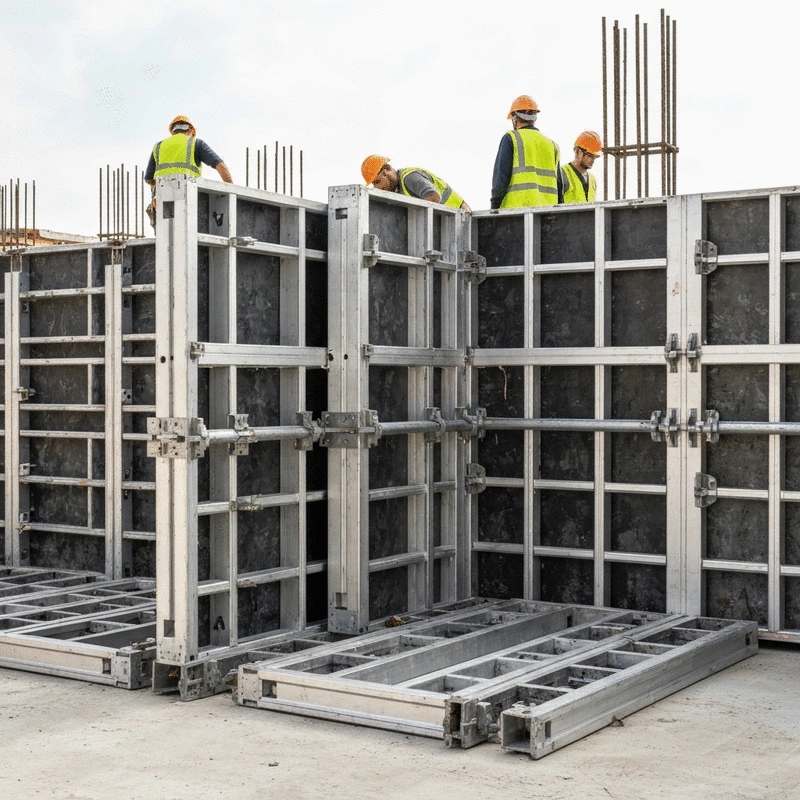
Did you know that switching to modular aluminum formwork can significantly reduce labor costs and improve project timelines? This innovative solution is transforming the construction industry by enhancing efficiency and safety.
What You Will Learn
- Modular aluminum formwork is lightweight and easy to transport, making setup faster and more efficient.
- The systems are highly durable with a long lifespan, contributing to cost-effectiveness and sustainability.
- Key components include panels, beams, and props that work together to ensure stability during the curing process.
- Utilizing strong connectors and accessories enhances safety and simplifies the assembly and disassembly of the formwork.
- Optimizing load distribution is crucial for maintaining structural integrity and reducing risks during concrete placement.
- Embracing these innovations aligns with modern construction goals of efficiency and economic sustainability.
Key Elements and Benefits of Modular Aluminum Formwork
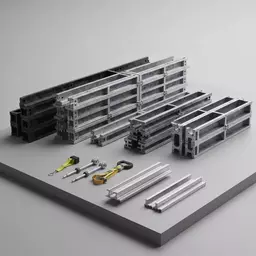
This visual highlights the core components and key advantages of modular aluminum formwork systems in concrete construction.
Panels, Beams, & Props
- • Primary surfaces for concrete
- • Support against lateral loads
- • Adjustable vertical stability
Connectors & Accessories
- • Facilitate assembly
- • Ensure structural stability
- • Maintain alignment during pours
Benefits of Modular Formwork
Efficiency & Cost Savings
- • Faster assembly/disassembly
- • Reduced labor costs
- • Material reusability
Safety & Integrity
- • Enhanced stability
- • Mitigates structural risks
- • Robust load distribution
Understanding Modular Aluminum Formwork Systems
As a construction professional, I often encounter questions about the advantages of modular aluminum formwork systems. These systems are designed to streamline the pouring process, making them an essential innovation in concrete slab construction. With my experience at Concrete Slab Innovations, I've seen firsthand how these systems can transform a project, enhancing both efficiency and safety.
But what exactly is modular aluminum formwork? In simple terms, it’s a construction framework made from aluminum that can be easily assembled and disassembled. This modular design allows for quick adjustments and customization, making it suitable for various project sizes and complexities. If you’re looking for a way to improve your projects, understanding modular aluminum formwork is a great place to start!
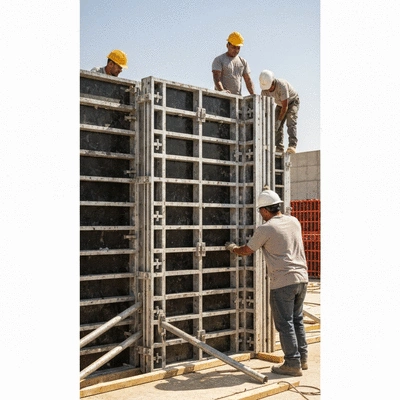
What is Modular Aluminum Formwork?
Modular aluminum formwork is a construction system that uses interlocking panels, beams, and other components to create a rigid support structure for pouring concrete. Unlike traditional wood or steel forms, aluminum formwork is lightweight yet incredibly strong. This enables contractors to handle it more easily while still achieving high load capacities. The modular aspect means that sections can be reused across different projects, which contributes to cost-effectiveness and sustainability.
- Lightweight and easy to transport
- Highly durable, with a long lifespan
- Customizable for different project needs
In my experience, embracing modular aluminum formwork can lead to significant time savings and improved project outcomes. By eliminating cumbersome setup processes, these systems allow teams to focus on what truly matters—delivering quality work!
Key Components of the System
Understanding the key components of a modular aluminum formwork system is critical for successful implementation. These components work together to ensure structural integrity and efficient construction processes. Let’s break them down!
Panels, Beams, and Props Explained
The heart of any modular formwork system lies in its panels, beams, and props. Panels serve as the primary surfaces that hold the concrete in place, while beams provide the necessary support against lateral loads. Props are adjustable vertical supports that ensure the system remains steady during the curing process. Together, they create a cohesive framework that can withstand the pressures of wet concrete.
Connectors and Accessories in Use
Connectors and accessories are equally important as they facilitate the assembly and stability of the overall system. This includes components like ties, clamps, and braces that help maintain alignment and prevent shifting. Using high-quality connectors not only enhances the safety of the structure but also simplifies the setup and takedown processes. Adhering to standards set by organizations like OSHA for concrete and masonry construction is crucial for ensuring worker safety.
- Strong connectors ensure stability
- Braces help maintain alignment during pours
- Accessories streamline assembly and disassembly
In my projects, I prioritize using reliable connectors and accessories to boost safety and efficiency. Trust me, investing in quality components pays off!
Benefits of Modular Formwork in Concrete Construction
Switching to a modular aluminum formwork system brings numerous benefits to concrete construction. First and foremost, it significantly reduces labor costs due to its lightweight design and ease of assembly. This means less manpower is required for setup, which can lead to faster project timelines!
- Faster assembly and disassembly
- Reduced labor costs
- Enhanced safety due to a stable framework
Additionally, the reusability of the panels and components means that you'll save on material costs over time. At Concrete Slab Innovations, we advocate for these innovative systems, as they align with our mission to promote economic sustainability and efficiency in construction practices. For comprehensive guidance on formwork for concrete, referring to resources such as the ACI 347R-14 Guide to Formwork for Concrete is highly recommended.
Pro Tip
To maximize the efficiency of your modular aluminum formwork system, always ensure that your team is well-trained in its assembly and disassembly. A knowledgeable crew can reduce setup times by up to 40%, directly impacting your project timelines and overall costs.
Frequently Asked Questions about Modular Aluminum Formwork
- What is modular aluminum formwork?
- It is a construction system using interlocking aluminum panels, beams, and components for concrete pouring, known for its lightweight nature, strength, and reusability.
- What are the main components of this system?
- Key components include panels (primary concrete surfaces), beams (support against lateral loads), props (adjustable vertical supports), and various connectors and accessories (for assembly, stability, and alignment).
- How does modular aluminum formwork benefit construction projects?
- It offers benefits such as reduced labor costs, faster assembly and disassembly, enhanced safety due to a stable framework, and material reusability, leading to overall cost-effectiveness and efficiency.
- Why is optimizing load distribution important in modular formwork?
- Optimizing load distribution is crucial for maintaining structural integrity, mitigating risks of structural failure, and boosting efficiency during concrete placement, which contributes to project success and profitability.
- Are there specific safety standards to follow when using formwork?
- Yes, it is essential to adhere to safety standards and guidelines, such as those provided by OSHA for concrete and masonry construction, to ensure worker safety and structural integrity.
Summarizing Key Takeaways on Load Distribution Optimization
As we wrap up our discussion on load distribution optimization within modular aluminum formwork systems, it's essential to reflect on the significant role it plays in our construction endeavors. Properly optimizing load distribution not only enhances safety but also boosts efficiency during concrete placement. For contractors and engineers, this means fewer headaches down the line, as effective load management leads to more robust structural integrity. Research by organizations like the Florida Department of Transportation on concrete bridge deck construction also demonstrates the critical role of proper load distribution.
To summarize, here are the key takeaways regarding load distribution optimization:
- Understanding Load Paths: Recognizing how loads travel through your structure is crucial for maintaining stability.
- Avoiding Common Mistakes: Being aware of issues like stress concentration can save you from costly redesigns.
- Utilizing Engineering Standards: Relying on established guidelines ensures your designs meet safety and efficiency benchmarks.
Importance of Optimizing Load Distribution for Success
Optimizing load distribution is not just a technical requirement; it's a pathway to achieving project success. When we consider safety, effective load distribution mitigates risks associated with structural failure. This is especially important when dealing with large-scale projects where the stakes are high. Plus, by enhancing the efficiency of the construction process, we can significantly reduce timelines and labor costs, ultimately leading to higher profitability.
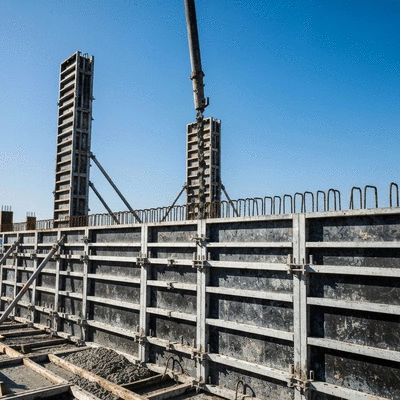
Imagine being able to complete a project ahead of schedule while ensuring the highest quality standards. This is achievable through a meticulous approach to load distribution, which is why I advocate for it at Concrete Slab Innovations.
Final Thoughts on Modular Aluminum Formwork Systems
In today's rapidly evolving construction landscape, modular aluminum formwork systems represent a significant advancement that aligns with our mission at Concrete Slab Innovations. These systems not only provide lightweight and durable solutions but also facilitate optimal load distribution. Their adaptability and efficiency make them an essential choice for modern concrete projects.
As we look forward, embracing these innovations will be crucial for staying competitive in the industry. I'm excited to see how more contractors and project managers leverage these systems to improve construction outcomes.
Take Action for Better Construction Outcomes
Checklist for Contractors and Engineers
To ensure you’re on the right path with your load distribution practices, here’s a handy checklist to consider:
- Evaluate load paths before beginning your project.
- Review weight-bearing capacities for all materials and components.
- Incorporate bracing and shoring techniques to enhance stability.
- Train your team on the importance of load distribution in design and execution.
Resources and Further Reading for Deepening Knowledge
For those looking to expand their understanding of load distribution and aluminum formwork systems, I recommend the following resources:
- Concrete Slab Innovations Guides - Comprehensive articles on formwork and slab solutions.
- Engineering Standards Organization - A resource for best practices in structural engineering.
- BIM Object - Insight into building information modeling for enhanced design efficiency.
Embracing Construction Technology for Future Projects
Lastly, I urge all industry professionals to actively embrace construction technology in their projects. Whether it's through modular systems, advanced load analysis software, or training programs, these tools can enhance your workflow and outcomes. The future of construction is bright, and those who adapt will not only survive but thrive. Let’s continue pushing the boundaries of what's possible in concrete slab construction!
Recap of Key Points
Here is a quick recap of the important points discussed in the article:
- Modular aluminum formwork systems streamline the concrete pouring process, enhancing efficiency and safety.
- These systems are lightweight, durable, and highly customizable for various project needs.
- Key components include panels, beams, props, and quality connectors that ensure structural integrity and stability.
- Benefits of modular formwork include reduced labor costs, faster assembly, and enhanced safety during construction.
- Optimizing load distribution is essential for structural integrity and project success.

Aidan Cromwell
Aidan Cromwell is a seasoned construction professional and industry expert with a passion for innovative building solutions. With extensive experience in concrete slab construction and a deep understanding of modular formwork systems, Aidan strives to educate and empower contractors, engineers, and project managers. His insights are grounded in practical knowledge and a commitment to advancing construction efficiency and safety.
Popular Posts
Aluminum Formwork and Carbon Reduction
![Aluminum Formwork and Carbon Reduction]() What if the way we build could significantly impact our planet's future? Embracing aluminum formwork
What if the way we build could significantly impact our planet's future? Embracing aluminum formwork
 What if the way we build could significantly impact our planet's future? Embracing aluminum formwork
Aluminum Formwork: Storage and Transport
![Aluminum Formwork: Storage and Transport]() What if the longevity of your aluminum formwork could be dramatically increased just by changing how
What if the longevity of your aluminum formwork could be dramatically increased just by changing how
 What if the longevity of your aluminum formwork could be dramatically increased just by changing how
Train Your Crew for Efficient Assembly
![Train Your Crew for Efficient Assembly]() Investing in training can transform your construction project outcomes. With proper techniques and k
Investing in training can transform your construction project outcomes. With proper techniques and k
 Investing in training can transform your construction project outcomes. With proper techniques and k
Aluminum Formwork Load Engineering Guidelines
![Aluminum Formwork Load Engineering Guidelines]() Consider this: a single miscalculation in load engineering can lead to structural failures and finan
Consider this: a single miscalculation in load engineering can lead to structural failures and finan
 Consider this: a single miscalculation in load engineering can lead to structural failures and finan
