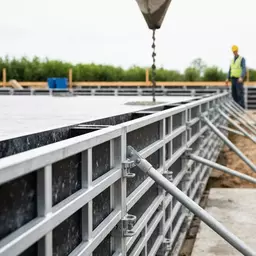
Lightweight & Reusable Design
- ✓ Reduces labor requirements
- ✓ Minimizes material waste
- ✓ Lower carbon footprint
Aluminum is significantly lighter than steel.
Have you considered how the right formwork can transform your concrete projects? Load-bearing aluminum formwork is not just a tool; it's a game changer for heavy-duty constructions. Its innovative design brings a wealth of advantages that can significantly impact your project's efficiency and safety.
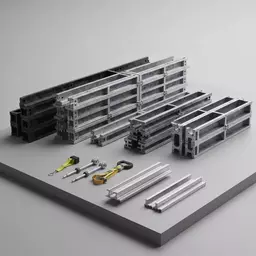
This visual presents key advantages of load-bearing aluminum formwork compared to other materials, highlighting its impact on project efficiency, cost, and safety.
When it comes to heavy-duty concrete projects, load-bearing aluminum formwork stands out as an essential tool. But what exactly is it? In simple terms, aluminum formwork systems are engineered frameworks designed to support poured concrete until it hardens. They are widely used in various construction applications, especially where strength and durability are critical. By understanding their purpose, we can appreciate how they enhance efficiency and safety on-site.
At Concrete Slab Innovations, we’ve seen firsthand how these systems improve project outcomes. With today’s focus on innovation, it’s crucial to delve deeper into their advantages and applications.
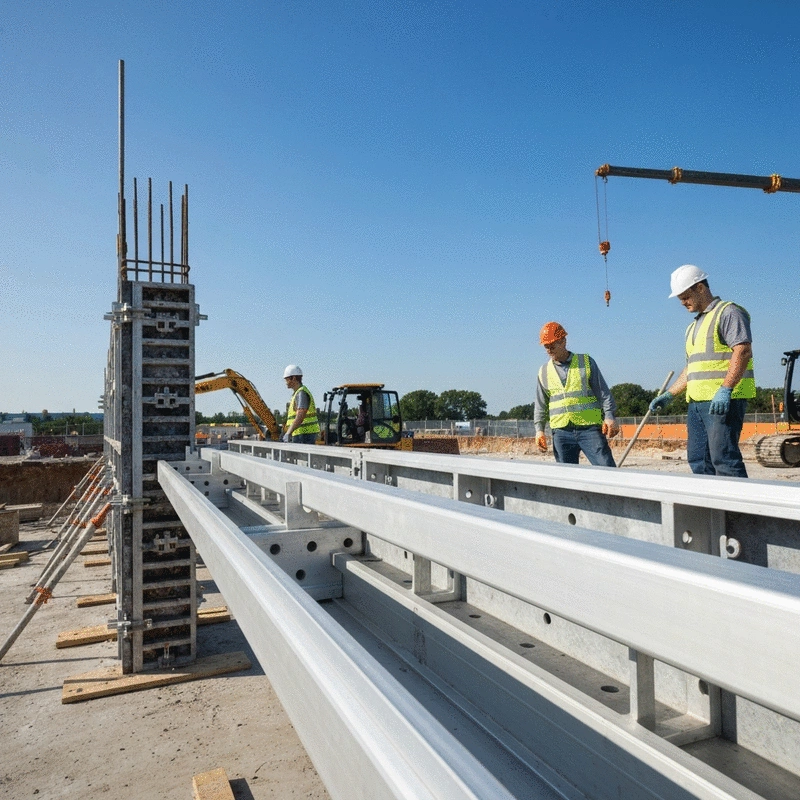
Load-bearing aluminum formwork is a specialized system that allows for the rapid construction of concrete structures. Its design is tailored to hold significant weight during the curing process, making it perfect for heavy-duty applications. This formwork not only supports the weight of fresh concrete but also ensures that the final structure retains its integrity under various load conditions. You can read more about various types of concrete formwork and their benefits.
Using aluminum formwork can dramatically reduce the amount of time spent on setup and dismantling, allowing teams to focus more on the execution of quality work.
One of the most significant benefits of aluminum formwork is its lightweight design. This characteristic means that fewer workers are needed for setup and takedown, which can save on labor costs. Moreover, aluminum is highly durable and can be reused across multiple projects, making it a smart investment for contractors looking to optimize their resources.
By choosing reusable systems, we can also actively participate in environmental sustainability—something that every modern business should consider!
Aluminum formwork systems are engineered to withstand impressive load capacities, often reaching up to 100 kN/m². This means they can handle even the most demanding concrete pouring conditions without compromising structural integrity. The ability to perform under heavy-duty conditions makes aluminum formwork a reliable choice for high-stakes projects.
Imagine not having to worry about your formwork collapsing under the weight of wet concrete! This peace of mind is invaluable on-site.
Switching to aluminum formwork can lead to significant cost reductions and faster project completion. The combination of reduced labor and faster assembly times translates directly to lower overall project costs. Clients appreciate knowing that they can complete projects more quickly without sacrificing quality. Further insights into the advantages of aluminum formwork can be found in research papers.
At Concrete Slab Innovations, we’re dedicated to helping our clients understand these economic advantages so they can make informed decisions about their projects.
When comparing aluminum to steel, strength and weight are two important factors. Aluminum is significantly lighter than steel, which translates to easier handling on-site. While steel has its advantages in strength, it often requires more labor for setup.
Choosing the right material can impact both safety and efficiency, making this comparison essential for project managers!
Aluminum excels over timber in terms of durability and moisture resistance. Unlike timber, which can warp or degrade over time, aluminum maintains its shape and strength, providing a more reliable formwork solution. This makes aluminum especially suitable for heavy-duty applications where long-term performance is critical.
By opting for aluminum, you can avoid costly replacements and delays that often accompany traditional timber systems.
Aluminum formwork proves invaluable in constructing high-rise buildings. Its lightweight nature allows for quicker installation and dismantling, which is essential when working at great heights. Plus, the precision it offers ensures that walls and slabs are poured accurately, maintaining the structural integrity of the entire building.
This adaptability makes it a favorite among builders facing the challenges of modern urban construction.
In addition to high-rises, aluminum formwork is widely used for walls and slabs across various projects. Its capacity to create seamless, robust structures enhances structural quality, making it ideal for both residential and commercial applications.
With the right formwork system, you can streamline the pouring process and achieve high-quality results!
Innovation is at the heart of aluminum formwork technology. Modular and self-climbing systems are two prime examples of advancements that have made heavy-duty projects easier and safer. These systems allow for quick adjustments and can adapt to various project requirements, making them a valuable asset on-site. The use of aluminum formwork in modern construction, including modular systems, is highlighted in industry reports.
At Concrete Slab Innovations, we are excited about these developments and how they can redefine the future of construction!
Understanding the seismic and wind resistance needs is crucial when selecting formwork for demanding environments. Aluminum formwork provides inherent stability and strength, making it a viable option in regions prone to earthquakes or high winds. This reliability ensures that structures can withstand unpredictable forces.
Choosing the right formwork can enhance not just safety but also compliance with local building codes.
The implications of fresh concrete pressure on load-bearing capabilities are significant. Aluminum formwork systems are designed to handle the pressure exerted by wet concrete, ensuring that they remain stable throughout the curing process. This stability is essential for maintaining the quality of the final structure.
By understanding these factors, you can ensure that your project meets the necessary standards and performs well under various conditions.
Adhering to construction safety standards and building code compliance is non-negotiable in heavy-duty projects. Aluminum formwork not only meets but often exceeds these requirements, providing a safe working environment for your team. Safety should always be a priority, and choosing the right materials is a critical step in ensuring that.
At Concrete Slab Innovations, we pride ourselves on promoting safety and efficiency on all our projects. Are you ready to explore how load-bearing aluminum formwork can elevate your next construction endeavor?
As we explore the benefits of load-bearing aluminum formwork, we want to hear from you! What aspect of aluminum formwork do you find most appealing for your projects?
When it comes to selecting the right formwork for your heavy-duty concrete projects, understanding the economic benefits is essential. At Concrete Slab Innovations, we've seen firsthand how load-bearing aluminum formwork systems can lead to significant financial advantages. Not only do they offer efficiency in construction, but they can also provide long-term savings compared to traditional materials.
To help you make an informed choice, let's break down some core economic factors:
This economic analysis can guide you in evaluating the most suitable formwork for your projects. Are you ready to explore how these factors can impact your overall budget?
At Concrete Slab Innovations, we understand that proper planning is key to the success of any construction project. That's why we provide a variety of resources to aid in your project planning and installation. Whether you're a contractor, engineer, or project manager, having the right tools at your fingertips can streamline your workflow.
Utilizing these resources can make a significant difference in your project outcomes. Have you checked out our library of materials yet? It’s worth a look!
Effective formwork installation is crucial for ensuring that your project stays on schedule and within budget. A well-planned approach can minimize delays and unexpected expenses. Here are some best practices to consider:
These practices are essential for managing project costs effectively. By implementing them, you can enjoy smoother operations and optimize the advantages of using aluminum formwork!
Here is a quick recap of the important points discussed in the article:
Aidan Cromwell is a seasoned construction professional and industry expert with a passion for innovative building solutions. With extensive experience in concrete slab construction and a deep understanding of modular formwork systems, Aidan strives to educate and empower contractors, engineers, and project managers. His insights are grounded in practical knowledge and a commitment to advancing construction efficiency and safety.