Reduced Labor Costs
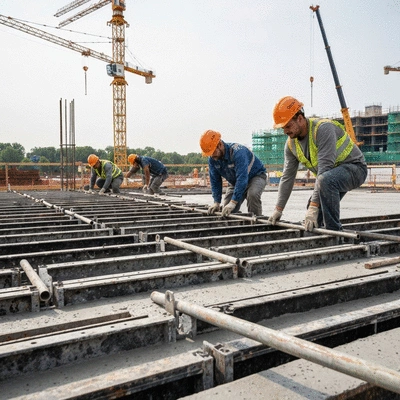
Lightweight design requires fewer workers for assembly and handling.
With construction methods continuously evolving, the introduction of aluminum formwork marks a significant shift in efficiency and sustainability. How much could your project benefit from embracing this innovative solution?
Aluminum formwork systems offer significant benefits over traditional methods, enhancing efficiency and project outcomes. The diagram below illustrates key advantages in terms of labor, speed, and structural support.
Lightweight design requires fewer workers for assembly and handling.
Quick installation and dismantling speed up project timelines significantly.
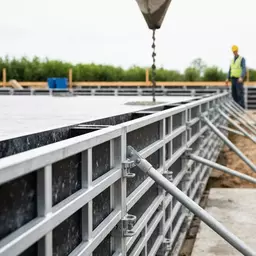
Robust aluminum supports heavy concrete loads without compromising integrity.
Minimizes risk of collapse and injuries compared to traditional methods.
As a construction professional, I’ve seen firsthand how the choice of formwork can significantly impact the efficiency of concrete pouring. Have you ever wondered what aluminum formwork is and why it’s gaining so much attention? This innovative approach to formwork offers several advantages over traditional methods, making it a game changer in the industry.
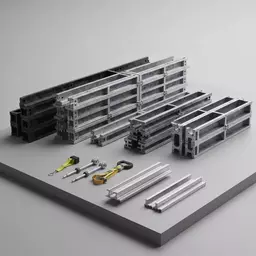
Aluminum formwork systems are lightweight, modular structures designed to hold concrete in place while it sets. Their unique properties not only enhance the pouring process but also lead to a more sustainable and cost-effective construction practice. By switching to aluminum, contractors can expect faster assembly times and reduced labor costs, allowing for more projects to be completed within tight schedules.
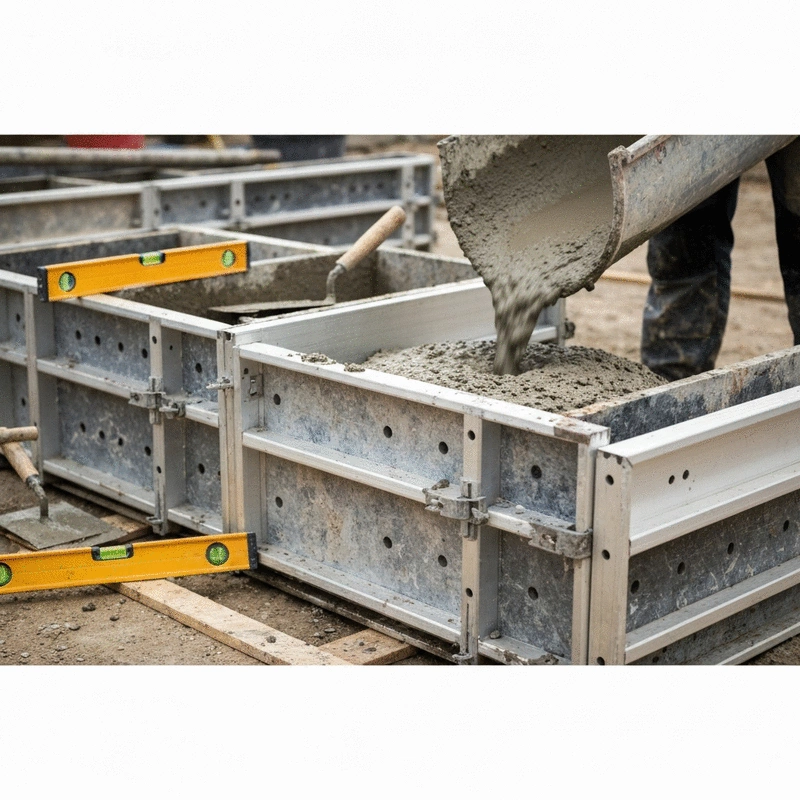
Aluminum formwork is a construction system made from high-strength aluminum, designed specifically for the pouring of concrete slabs. Its lightweight design allows for easy handling and quick setup, which is essential on any busy construction site. Here are some key benefits:
These benefits not only improve efficiency but also enhance the overall quality of the concrete pour. Imagine the time and resources you could save by implementing aluminum formwork in your projects!
The shift towards lightweight design in construction is a major factor in enhancing overall project efficiency. Why does this matter? A lighter formwork system means that contractors can minimize the need for heavy machinery and reduce the complexity of logistics on-site. This ultimately leads to cost savings and better resource management.
Lightweight aluminum formwork eliminates the usual struggles associated with traditional concrete formwork. It requires less effort to transport and install, which in turn minimizes the risk of injuries and errors during assembly. As a result, your team can focus more on precision and quality rather than dealing with cumbersome materials.
When choosing the right formwork system for your concrete projects, there are several factors to consider. I’ve found that understanding your specific project needs can significantly influence your choice. Here are some essential considerations:
By carefully evaluating these aspects, contractors can select the most appropriate aluminum formwork that aligns with their project goals. Are you ready to explore how these systems can transform your concrete pouring approach?
To maximize the benefits of aluminum formwork, consider investing in training for your team on best practices for installation and safety. A well-trained crew can significantly reduce assembly time and improve overall project efficiency, ensuring that you leverage the full potential of this innovative system.
Reflecting on the best practices for concrete pouring with aluminum formwork, it's clear that a structured approach can significantly enhance project outcomes. As someone deeply invested in efficient construction practices at Concrete Slab Innovations, I've seen firsthand how these strategies can lead to smoother workflows and superior results. Let's summarize some of the most vital points every contractor and builder should keep in mind.
These key takeaways form the backbone of effective concrete pouring practices. When applied diligently, they can lead to significant improvements in both project efficiency and final product quality. Remember, investing time in preparation and following best practices will pay off in the long run, reducing errors and enhancing the overall durability of your concrete structures.
As you wrap up your learning journey on concrete pouring with aluminum formwork, it’s important to consider the next steps for your projects. There are numerous resources available that can further assist you in refining your methods and ensuring success.
To help streamline your operations, I recommend utilizing downloadable checklists and guides specifically tailored for aluminum formwork installation. These resources can serve as a quick reference to ensure all critical aspects are covered before commencing a pour.
Additionally, reviewing case studies and visuals can provide valuable insights into real-world applications of aluminum formwork. At Concrete Slab Innovations, we showcase examples that highlight how innovative solutions have transformed projects. These case studies not only offer practical knowledge but also inspire new ideas for your own work.
Lastly, I encourage you to explore performance testing and validation methods. Understanding how to assess your concrete's quality and durability is fundamental to achieving long-term success. Implementing rigorous testing protocols can ensure that your projects meet the highest standards, ultimately leading to satisfied clients and fewer callbacks.
Here is a quick recap of the important points discussed in the article:
Aidan Cromwell is a seasoned construction professional and industry expert with a passion for innovative building solutions. With extensive experience in concrete slab construction and a deep understanding of modular formwork systems, Aidan strives to educate and empower contractors, engineers, and project managers. His insights are grounded in practical knowledge and a commitment to advancing construction efficiency and safety.