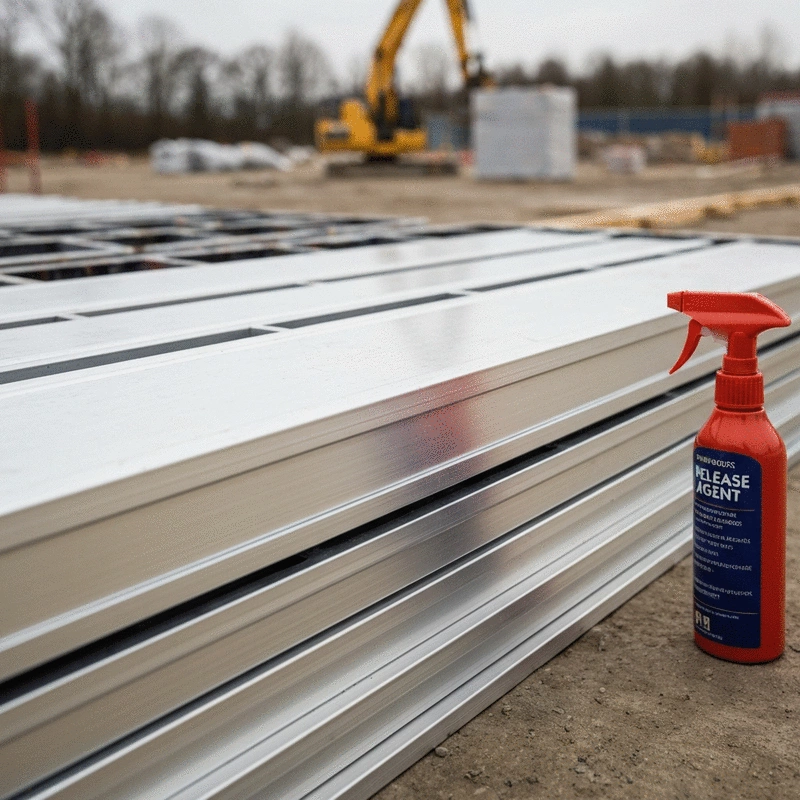
1. Hydrophobic Barrier Creation
Release agents form a water-repellent layer on aluminum formwork, preventing moisture from concrete from adhering and ensuring a smooth, clean separation.
Physical Separation
What if a simple agent could drastically improve the quality of your concrete work? In the world of aluminum formwork, understanding release agents is key to achieving optimal results. These substances not only facilitate easier demolding but also enhance the finish of your concrete, making them invaluable for any construction project.
Delve into the dual action of release agents in preventing adhesion: physical barrier creation and chemical interaction with concrete lime.
Release agents form a water-repellent layer on aluminum formwork, preventing moisture from concrete from adhering and ensuring a smooth, clean separation.
They chemically react with cement's lime content, creating a non-adhering protective film that withstands concrete's caustic properties.
When working with aluminum formwork, understanding release agents is crucial to achieving optimal results. But what exactly are these agents? In essence, they are substances that facilitate the separation of the formwork from the concrete after it has set. This separation is vital to ensure that the finish of the concrete remains intact and to avoid damage to both the formwork and the poured slab.
In my experience at Concrete Slab Innovations, I've seen firsthand how the right release agent can make a significant difference in project efficiency. Not only do they aid in the demolding process, but they also help maintain the quality of the surface finish, allowing contractors to deliver exceptional results to their clients!
Release agents work by creating a barrier between the concrete and the aluminum surface of the formwork. This barrier is crucial for preventing adhesion, which can lead to unsightly damage and increased labor efforts during demolding. But how do they achieve this?
These properties ensure that the aluminum formwork can be reused for multiple pours without significant wear or damage, making them invaluable in any construction project!
The primary mechanism of release agents is their ability to create a hydrophobic barrier. This works by coating the aluminum surface, allowing water-based concrete to slide off easily once it has set. By doing this, they minimize the risk of adhesion that typically occurs, ensuring a cleaner release every time.
From my time in the field, I can attest that using the right type of release agent not only speeds up the demolding process but also contributes to the longevity of your formwork systems. It’s all about efficiency and prolonging the life of your equipment!
Release agents also interact chemically with the lime present in concrete. This chemical interaction is pivotal in preventing adhesion, as it provides a protective layer that withstands the caustic nature of wet concrete. Understanding this interaction is key to selecting the appropriate release agent for your specific project needs. For more detailed information on chemical interactions in concrete, you can refer to resources from reputable organizations like The Aluminum Association, which provides technical resources on aluminum and concrete.
In practice, using a suitable release agent means fewer headaches on-site and a smoother workflow—something every contractor strives for!
There are several types of release agents available, each with its unique advantages and applications. Choosing the right one can greatly impact your project’s success and efficiency. Here’s a breakdown of the most common types:
Each type serves a purpose, and understanding these differences can help you make informed decisions that enhance the quality of your concrete work!
Water-based release agents are gaining popularity due to their environmentally friendly nature. They are non-toxic and easy to clean, making them a great choice for projects that prioritize sustainability. Additionally, they work effectively with various concrete mixes, providing a reliable release and minimizing residue on the formwork.
I've often recommended them for residential projects where the focus is on maintaining a clean work environment without compromising on quality.
On the other hand, oil-based release agents offer excellent performance in terms of creating a strong barrier against adhesion. However, they can leave a film that may require thorough cleaning before reusing the formwork. Keep in mind that while they are effective, they may not be the best option for every project due to their environmental impact. The Environmental Protection Agency (EPA) provides guidance on best management practices for concrete washout, which can be relevant when considering the environmental impact of different release agents.
It's a balance between performance and sustainability—consider your project requirements carefully!
Solvent-based release agents dry quickly, making them suitable for fast-paced projects. Their effectiveness often translates to smoother finishes and easier removal of the formwork. However, they may pose health risks and require careful handling and ventilation during application. Further information on occupational safety when handling such materials can be found through OSHA's chemical safety resources.
In my experience, they work best in high-demand commercial projects where time is of the essence and quality cannot be compromised.
Chemical release agents are designed for specific conditions, such as high temperatures or unique concrete formulations. They provide tailored solutions that can enhance performance under challenging circumstances. However, it's essential to understand the specific needs of your project to choose the right chemical agent.
Using the right chemical release agent can significantly enhance the quality of your concrete work, ensuring a precise and efficient process every time!
Here are some common questions about release agents and their use in aluminum formwork:
When it comes to choosing release agents, what factors do you consider most important? Is it ease of application, environmental impact, or performance? Share your thoughts below:
In today’s competitive construction landscape, understanding how to maximize your aluminum formwork performance is crucial. By integrating release agents and surface treatments, we can significantly enhance the overall efficiency and output of our projects. The interplay between these two elements not only improves demolding efficiency but also contributes to the durability and quality of the concrete produced. As someone who has spent years in the concrete slab construction field, I've witnessed firsthand the difference these practices can make in project success!
To summarize, here are the key takeaways regarding the implementation of release agents and surface treatments:
By focusing on these areas, we can create a more streamlined construction process that not only meets but exceeds client expectations. Now, let’s dive into the next steps you can take to implement these strategies in your projects!
Ready to elevate your construction practices? Implementing effective strategies for using release agents and surface treatments is the way to go! Below is a practical implementation guide to help you through the process:
When considering how to best apply these strategies, I recommend the following steps:
These steps will set you up for success and can dramatically enhance how aluminum formwork performs on your job sites.
Here are some additional best practices to keep in mind as you integrate these strategies:
Sticking to these practices can streamline your operations and ensure the best results for each project!
Sometimes, the best path forward is to engage with industry professionals who can offer tailored solutions. At Concrete Slab Innovations, we are here to provide you with the insights you need to make informed decisions. Whether through our detailed guides or personalized consultations, we aim to empower you in your construction journey.
Finally, don’t underestimate the value of user experience insights. Collect feedback from your team and clients to refine your processes continually. By actively seeking input and making adjustments, you can enhance your construction processes and achieve better outcomes in every project you undertake. Trust me, the effort you put into this will pay off in the long run!
Here is a quick recap of the important points discussed in the article:
Aidan Cromwell is a seasoned construction professional and industry expert with a passion for innovative building solutions. With extensive experience in concrete slab construction and a deep understanding of modular formwork systems, Aidan strives to educate and empower contractors, engineers, and project managers. His insights are grounded in practical knowledge and a commitment to advancing construction efficiency and safety.