When planning a concrete slab project, understanding the cost components can help you make informed decisions and save money. Are you ready to navigate the intricacies of concrete slab installation costs with confidence?
What You Will Learn
Material selection significantly affects concrete slab costs, with choices like mix type and reinforcement materials playing pivotal roles.
Labor costs can vary greatly based on location, contractor experience, and project complexity—understanding these factors is crucial for budgeting.
Different project types, such as driveways or patios, have distinct cost ranges and considerations that impact overall expenses.
Site preparation, including grading and excavation, can drastically influence installation costs; proper planning here can prevent future challenges.
Choosing between DIY and professional installation involves weighing cost savings against potential quality issues and time commitments.
The cost of a concrete slab project is influenced by several factors, including material choices, labor, and the specific application. The visual below outlines the primary cost drivers and typical price ranges for different project types.
Saves labor costs, but requires skill, time, and tools. Risks include quality control issues and costly mistakes.
Professional:
Offers expertise and faster completion but at a higher cost. Ensures quality and reduces risks.
Understanding Concrete Slab Installation Costs
When embarking on a concrete slab project, it's essential to grasp what influences installation costs. From material choices to labor expenses, every aspect contributes to your overall budget. At Concrete Slab Innovations, I've seen firsthand how understanding these factors can lead to better decision-making and ultimately, savings!
In this section, we'll explore the various elements that shape concrete slab prices, offering insights that can help you navigate your project with confidence. Let's dive in!
What Influences Concrete Slab Prices?
The cost of concrete slabs isn't just a flat rate; it fluctuates based on several key factors. Recognizing these can help you plan effectively and avoid unexpected expenses.
Material Costs and Their Impact on Your Budget
Material selection is one of the most significant drivers of concrete slab costs. The type of concrete mix, reinforcement materials, and even the choice of formwork can all affect pricing. Here's a quick overview of what to consider:
Concrete mix: Standard mixes are generally less expensive than specialized ones.
Reinforcement: Options like rebar and wire mesh can add to costs but enhance durability.
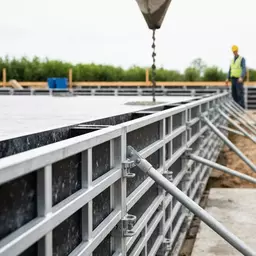
Formwork: Innovative aluminum formwork systems, like those we focus on at Concrete Slab Innovations, can save time and money in the long run!
By evaluating these material options, you can better align your budget with the quality and durability you desire.
Labor Costs: What to Expect When Hiring Professionals
Labor costs can vary widely based on your location and the complexity of the project. Hiring skilled professionals is crucial, but it can also add significantly to your budget. According to the U.S. Bureau of Labor Statistics, construction labor costs can fluctuate, impacting overall project expenses. Here are some insights to guide you:
Hourly rates: Expect to pay more for experienced contractors who can deliver quality work efficiently.
Project size: Larger projects might benefit from bulk pricing, but don't overlook the value of quality.
Seasonal demand: Costs may be higher during peak construction seasons.
It's essential to factor in these labor costs when planning your concrete slab installation, as they can significantly influence your overall expenses.
Cost Breakdown by Project Type
Understanding how different types of projects impact costs can help you allocate your budget more effectively. Let’s break down some common concrete slab installations.
Driveways: Average Costs and Key Considerations
For driveways, costs typically range based on size and finish. Generally, a standard concrete driveway can cost between $4 to $10 per square foot. Key considerations include:
Thickness: Thicker slabs can withstand heavier loads but will cost more.
Finishing options: Decorative finishes can enhance curb appeal but will increase the final price.
Excavation needs: Site preparation can add additional expenses if grading is required.
Investing in a quality driveway slab can provide lasting value, so consider your options carefully!
Patios: Pricing Insights for Different Designs
Patios offer a fantastic opportunity for creative designs, but they can also vary significantly in cost. Standard pricing might fall between $6 to $14 per square foot depending on design intricacies. Factors that can influence these costs include:
Shape and size: Custom shapes or larger patios will naturally increase costs.
Finishing techniques: Techniques like stamping or staining can provide beautiful results at a higher cost.
Site accessibility: Difficult access can lead to increased labor costs.
Ultimately, investing in a well-planned patio can elevate your outdoor space while fitting within your budget.
Garage and Foundation Slabs: Understanding the Expense
Garage and foundation slabs represent a more significant investment, typically costing around $5 to $15 per square foot based on various factors. Consider these elements when budgeting:
Load requirements: Foundation slabs need to support heavy loads, which can increase material and labor costs.
Waterproofing options: Adding moisture barriers can enhance longevity but come at an additional cost.
By understanding these costs, you can make informed decisions that align with your project's goals.
Factors That Affect Concrete Slab Installation Costs
Beyond materials and labor, other factors play a crucial role in determining the final cost of your concrete slab installation.
Site Preparation: Importance of Grading and Excavation
Proper site preparation is essential for the success of any concrete slab project. Factors like grading, excavation, and site accessibility can significantly affect your costs. Consider these points:
Excavation needs: Uneven terrain may require additional excavation, increasing costs.
Grading: Proper grading ensures drainage and stability, which is crucial for long-lasting slabs.
Access challenges: Difficult site access can lead to increased labor costs.
Investing in thorough site preparation can help prevent future issues, ultimately saving you money in the long run!
Reinforcement Options: Comparing Rebar, Wire Mesh, and More
Choosing the right reinforcement is vital for ensuring a strong and durable slab. Let's evaluate some common options:
Rebar: Provides superior strength and is often preferred for heavy-duty applications.
Wire mesh: A cost-effective option for residential projects, offering decent strength.
Fiber reinforcement: Increases tensile strength with minimal impact on cost.
Analyzing these options can help you select the best reinforcement strategy that fits both budget and project requirements.
Decorative Finishes: Pricing Stamping and Polishing Techniques
Decorative finishes can transform a basic concrete slab into a stunning feature of your project. However, they come with additional costs. Here's what to consider:
Stamping: Adds texture and style but can increase costs by 20-30%.
Polishing: A sleek finish that enhances durability, though also adds to your budget.
Staining: Offers color options at a moderate cost.
Incorporating these finishes thoughtfully can elevate the aesthetic of your concrete slab while ensuring it remains within your budget!
Understanding Concrete Mix and Its Impact on Cost
The type of concrete mix you choose has a significant impact on your installation costs. Quality materials lead to better performance, so let’s explore this further.
The Role of Quality Materials in Pricing
High-quality materials often come with a higher price tag but can save you money in the long run. Factors to consider include:
Durability: Higher quality mixes resist cracking and wear.
Workability: Quality mixes are easier to work with, potentially reducing labor costs.
Load capacity: Select a mix that meets your project's specific needs.
Investing in quality materials ensures that your concrete slab will stand the test of time, making it a smart financial decision!
Choosing the Right Concrete Mix for Your Project
Selecting the appropriate concrete mix is critical for achieving the desired outcome. Here are some key considerations:
Project type: Different applications require different mixes.
Environmental conditions: Weather can affect mix performance; consult with professionals.
Budget constraints: Balance your needs against available resources.
Taking the time to choose the right mix can significantly impact both the performance and the costs of your concrete slab.
Regional Price Variations in Concrete Slab Installation
Did you know that location can greatly influence concrete slab installation costs? Let’s look at how regional factors come into play.
How Local Market Conditions Influence Costs
Local supply and demand dynamics can affect pricing significantly. Here are a few factors to consider:
Material availability: Regions with abundant materials may see lower costs.
Labor supply: Areas with a high demand for construction can drive up labor rates.
Competition among contractors: More options can lead to competitive pricing.
Being aware of these local conditions can help you negotiate better pricing for your concrete slab installation.
Comparing Prices Across Different Areas
To effectively budget for your project, it’s wise to compare prices in various regions. Keep these points in mind:
Research local contractors: Get multiple quotes to gauge average pricing.
Understand regional regulations: These can affect labor and material costs.
Network with local professionals: They can share insights into pricing trends.
By comparing prices, you'll be better equipped to make informed decisions that align with your budget and project goals.
Understanding Local Regulations and Permits Affecting Costs
Local regulations and permits can add to the expense of your concrete slab project. For instance, understanding federal guidance on grants and agreements, as outlined by the Federal Register, can inform how certain projects are funded and regulated. Additionally, sources like the Congressional Research Service frequently publish insights into infrastructure and construction policy that may impact local requirements for concrete slab installations. Here's what to keep in mind:
Permitting fees: Don’t forget to budget for necessary permits!
Building codes: Compliance may require additional materials or labor.
Inspections: Some areas require inspections, which can incur extra costs.
Being proactive about understanding and budgeting for these regulations can prevent surprises down the line. It’s all about planning for success!
DIY vs. Professional Installation: Cost Analysis
One of the biggest decisions you'll face is whether to tackle the project yourself or hire professionals. Let’s weigh the pros and cons.
Weighing the Pros and Cons of Each Approach
There are benefits and drawbacks to both DIY and professional installations. Here’s a quick comparison:
DIY: Saves on labor costs but requires time, skill, and tools.
Professional installation: Offers expertise and potentially faster completion but at a higher cost.
Hybrid approach: Consider doing prep work yourself to save money while hiring pros for technical tasks.
Ultimately, the choice depends on your budget, timeline, and comfort level with the tasks involved.
Common Risks and Challenges of DIY Installation
While DIY can be tempting, there are several risks to be aware of. Here are a few:
Quality control: It's easy to overlook details without professional experience.
Time investment: DIY can take longer than expected, delaying your project.
Potential for costly mistakes: Errors could lead to expensive fixes!
Being aware of these challenges can help you make a more informed decision about how to approach your concrete slab installation.
Did You Know?
According to recent studies, proper site preparation can reduce installation costs by up to 15-20% in concrete slab projects. Investing time and resources in grading and excavation not only ensures stability but also saves you money in the long run!
Long-Term Considerations for Concrete Slabs
When it comes to concrete slabs, understanding the long-term considerations can save you time and money in the future. After investing in a new slab, it's crucial to think about maintenance and potential repair costs. By planning ahead, you can ensure that your concrete remains in top shape for years to come!
This section will delve into vital aspects like maintenance, repair options, and how to get accurate quotes that fit your budget. Let's explore these topics so you can make informed decisions regarding your concrete slab projects.
Maintenance Costs: What to Plan For
Just like any other feature of your home or business, concrete slabs require regular maintenance to prolong their lifespan. Various factors can influence your maintenance costs, including the finishing options you choose. Are you leaning towards a polished finish or a stamped design? Each has different implications on upkeep.
Polished Concrete: Generally requires less maintenance but can be susceptible to scratches.
Stamped Concrete: Offers aesthetic appeal but may need sealing every few years to protect against wear.
Unfinished Concrete: The most durable but could be more vulnerable to stains and damage over time.
Additionally, consider how weather and environmental factors can impact the longevity of your slabs. For instance, extreme temperatures and moisture levels can lead to cracking if not properly addressed.
Durability Trade-Offs with Different Finishing Options
Choosing the right finish can be a balancing act between aesthetics and durability. While a decorative finish might enhance visual appeal, it may also require more frequent maintenance. Reflect on your priorities and consult a professional to find the perfect match for your needs!
Weather and Environmental Factors Affecting Longevity
Different climates can pose unique challenges for concrete slabs. Areas with heavy rainfall might require additional drainage solutions, while regions with extreme heat may necessitate specific material choices to prevent cracking. Be sure to take local conditions into account when planning your installation!
Understanding Repair Costs and Options for Concrete Slabs
Occasionally, even the best-maintained concrete slabs can develop issues that need addressing. Understanding these potential problems will help you budget accordingly. Common issues include cracking, settling, and surface wear, all of which can affect your overall costs.
Cracks: Can often be sealed but may indicate deeper problems.
Surface Wear: Frequent use can lead to a need for resurfacing.
Settling: Might require excavation and re-leveling.
Having a clear understanding of these potential repairs will help you make better financial decisions as your slab ages. Let's not forget the cost-effective solution of concrete overlays, which can rejuvenate your slab without the expense of complete replacement!
Concrete Overlays: A Cost-Effective Solution
Concrete overlays are a fantastic option if your slab shows signs of wear but isn’t ready for replacement. They can give your existing surface a new lease on life while being much less expensive than tearing out and rebuilding. Consider this approach if you're looking to improve aesthetics and durability without breaking the bank!
Frequently Asked Questions (FAQs)
What are the main factors influencing concrete slab installation costs?
The primary factors include material choices (concrete mix, reinforcement), labor costs, site preparation (grading, excavation), reinforcement options (rebar, wire mesh), decorative finishes, and regional price variations.
How do project types like driveways and patios differ in cost?
Driveways typically range from $4-$10 per sq ft, while patios can cost $6-$14 per sq ft, depending on design complexity and finishes. Garage/foundation slabs are usually $5-$15 per sq ft due to heavy load requirements and thickness.
Is DIY concrete slab installation recommended?
DIY can save on labor costs but carries risks like quality control issues, increased time investment, and potential for costly mistakes if not executed properly. Professional installation offers expertise and faster completion with fewer risks.
What are the long-term considerations for concrete slabs?
Long-term considerations include maintenance costs (e.g., sealing stamped concrete), potential repair options for cracks or settling, and the durability trade-offs associated with different finishing options. Weather and environmental factors also play a role in longevity.
How can I get accurate quotes from contractors?
To get accurate quotes, request detailed estimates that outline all materials and labor costs, ask for references to check previous work, and inquire about warranties offered. It's also beneficial to compare multiple quotes and understand local regulations.
Getting Accurate Quotes: Tips for Homeowners
Now that you have a grasp of potential long-term costs, it’s time to tackle how to get accurate quotes from contractors. Not all estimates are created equal, so you’ll want to ensure you’re getting a fair deal. Start by reaching out to multiple contractors to compare pricing and services.
Request detailed quotes: Make sure the estimates outline all materials and labor costs.
Ask for references: Check previous work to ensure quality.
Inquire about warranties: Understand what guarantees are offered on both materials and labor.
Taking these steps will help you find a contractor who aligns with your project goals while staying within your budget. Remember, the more informed you are, the better equipped you'll be to negotiate and make decisions!
How to Approach Contractors for the Best Estimates
When approaching contractors, don't hesitate to discuss your budget openly. A good contractor will appreciate your honesty and work with you to find solutions that fit your financial constraints. By communicating your needs effectively, you can foster a collaborative relationship right from the start!
Understanding Quotes: What to Look for and Questions to Ask
Before signing any contracts, make sure you understand all components of the quote. Look for clarity in pricing, timelines, and materials. Ask questions if anything seems unclear—after all, this is your investment, and you should feel confident in the details!
Final Thoughts on Concrete Slab Installation Costs
In summary, being aware of long-term considerations, maintenance, and repair costs can significantly impact budgeting for your concrete projects. By planning ahead, you can avoid unexpected expenses and enjoy the benefits of your investment for years to come.
Encouraging informed decision-making is key. As you move forward with your concrete slab project, remember that a little knowledge can go a long way in ensuring a successful outcome—don't hesitate to reach out to Concrete Slab Innovations for guidance and support!
Recap of Key Points
Here is a quick recap of the important points discussed in the article:
Material Costs: Choose the right concrete mix and reinforcement options to align with your budget and durability needs.
Labor Costs: Be prepared for varying labor rates based on project complexity and local market conditions.
Site Preparation: Proper grading and excavation are crucial to avoid additional costs down the line.
Long-Term Considerations: Regular maintenance and understanding potential repair costs can save you money in the future.
Accurate Quotes: Request detailed estimates from multiple contractors to ensure you get the best deal.
Aidan Cromwell
Aidan Cromwell is a seasoned construction professional and industry expert with a passion for innovative building solutions. With extensive experience in concrete slab construction and a deep understanding of modular formwork systems, Aidan strives to educate and empower contractors, engineers, and project managers. His insights are grounded in practical knowledge and a commitment to advancing construction efficiency and safety.
Concrete Slab Innovations is dedicated to advancing concrete slab construction through innovative aluminum formwork systems. Our mission is to provide contractors, engineers, and project managers with cutting-edge methods for safe and precise slab support.
Optimize your concrete slab projects by integrating modular aluminum formwork. Its lightweight design significantly cuts down on labor and setup time!
Enhance project efficiency by understanding the high-load capacity of modern aluminum systems. This ensures structural integrity and faster pour cycles!
Reduce material costs and waste by choosing reusable aluminum formwork. A sustainable choice that also boosts your bottom line!
Prioritize job site safety with robust aluminum formwork. Its stable design minimizes risks during the critical concrete pouring phase.
Streamline your project timelines. Modular aluminum formwork allows for quicker assembly and dismantling, speeding up overall construction.
Achieve consistent slab quality through precise formwork alignment. High-quality systems ensure accurate dimensions and a superior finish.
Educate your team on the benefits of innovative formwork. A knowledgeable crew is crucial for maximizing efficiency and safety.
Explore case studies of successful projects utilizing advanced formwork. Learn from real-world applications to inform your next build.
Consider the long-term economic advantages of investing in quality formwork systems. Durability means less replacement and better ROI.
Implement rigorous quality control checks during formwork setup. Precision at this stage prevents costly rework later.
Stay updated on the latest advancements in concrete technology and formwork. Continuous learning keeps your projects cutting-edge.
Consult with formwork specialists to tailor solutions to your specific project needs. Custom approaches yield optimized results.
Document your formwork processes for consistency and training. Standardized procedures improve efficiency and reduce errors.
Regular maintenance of your formwork equipment extends its lifespan and ensures reliable performance on every job.
Ready to elevate your concrete slab projects? Dive into our resources to discover how innovative formwork can transform your construction practices!