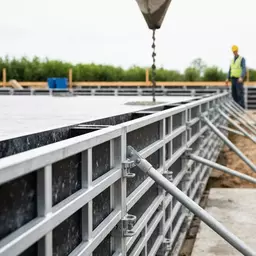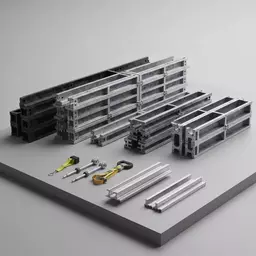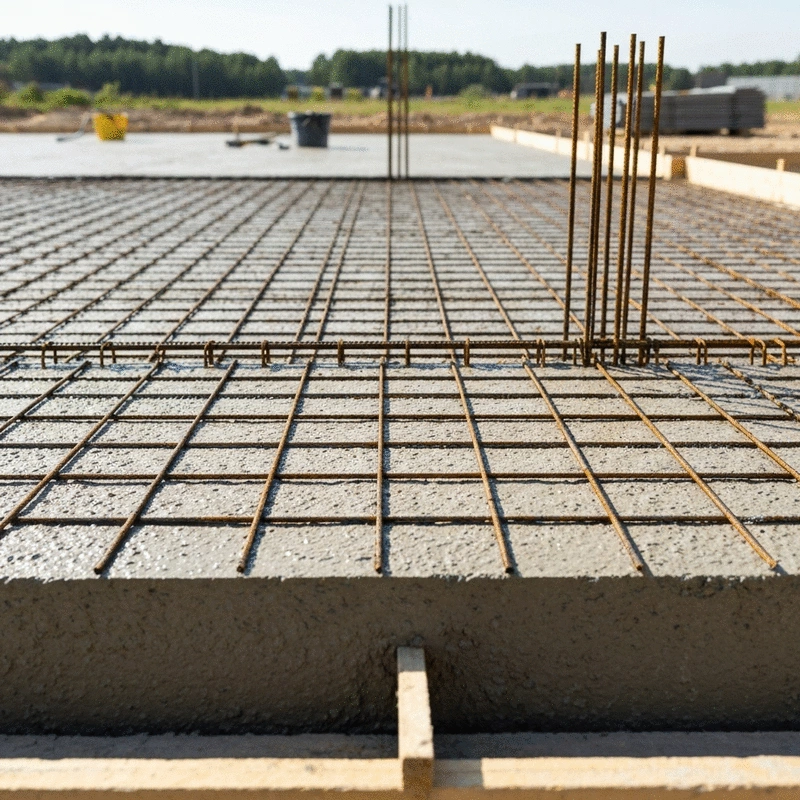
In the world of concrete construction, understanding the pivotal role of reinforcement can mean the difference between structural failure and lasting success. Are you ready to elevate your concrete projects?
What You Will Learn
Reinforced concrete slabs combine the compressive strength of concrete and the tensile strength of steel for enhanced durability.
Strategic placement of steel rebar helps control cracking and distribute loads evenly across slabs.
Choosing between one-way and two-way slab designs is crucial based on project requirements.
Utilizing modern design software improves accuracy and compliance in concrete slab reinforcement.
Implementing quality control measures during reinforcement placement ensures structural integrity and safety.
The article discusses the importance of concrete slab reinforcement, highlighting the roles of concrete and steel rebar, and best practices in design. It emphasizes how concrete provides compressive strength and steel rebar offers tensile strength, working synergistically for structural integrity. The use of software tools and adherence to compliance regulations are also stressed.
Key Aspects of Concrete Slab Reinforcement
Concrete's Role
Primarily provides compressive strength, resisting forces that push materials together.
Excellent under pressure
Forms the bulk of the slab
Steel Rebar's Contribution
Adds tensile strength and ductility, resisting forces that pull materials apart.
Prevents cracking
Distributes loads evenly
Design Best Practices
Critical for structural performance and longevity.
Proper bar sizing & spacing
Quality control onsite
Importance of Software Tools
Streamline design and ensure accuracy.
Load simulation
Code compliance
Understanding Concrete Slab Reinforcement: Key Principles and Benefits
When diving into the world of concrete slab construction, the concept of reinforced concrete slabs stands out. Essentially, these slabs incorporate reinforcement materials, primarily steel, to enhance their load-bearing capabilities. By understanding the principles behind this reinforcement, we can appreciate its crucial role in achieving structural integrity.
Reinforced concrete slabs are designed to withstand greater forces than their unreinforced counterparts. They offer a combination of strength and flexibility, making them the go-to solution for various construction scenarios, from residential buildings to large commercial projects.
Defining Reinforced Concrete Slabs
Reinforced concrete slabs involve a blend of concrete and steel reinforcement that works together to resist tensile and compressive forces. The concrete provides compressive strength, while the steel offers tensile strength, creating a robust and reliable structure. This combination is essential to ensure that the slab can handle weight and stresses without cracking or failing.
Concrete provides excellent compressive strength.
Steel reinforcement adds tensile strength to the structure.
This synergy allows slabs to perform well under various loads.
By integrating steel reinforcement, we enhance the durability and lifespan of concrete slabs, making them a preferred choice in modern construction.
The Role of Reinforcement in Structural Integrity
Now, let's explore how reinforcement contributes to the overall structural integrity of concrete slabs. Without reinforcement, concrete is susceptible to cracking under tension. However, by placing steel bars (rebar) strategically within the slab, we can effectively control where and how cracks may occur.
Reinforcement not only improves tensile strength but also helps distribute loads evenly across the slab. This characteristic is critical, especially when dealing with large spans or heavy loads, thus preventing potential failures. Wouldn’t it be great to know that your slab is designed to withstand the test of time?
Importance of Steel Rebar in Reinforced Concrete
Steel rebar plays a pivotal role in reinforced concrete, primarily due to its high tensile strength. This metal is not only strong but also quite ductile, allowing it to absorb energy and deform without breaking. The integration of steel rebar ensures that as the loads on the slab increase, the reinforcement will take the additional stress rather than the concrete alone.
Rebar enhances the flexural strength of the slab.
It helps manage tensile forces that could lead to cracking.
Steel’s ductility allows for greater resilience under load.
In summary, the use of steel rebar in reinforced concrete slabs is essential for ensuring both structural integrity and longevity. As someone passionate about advancing concrete slab construction, I can’t emphasize enough how imperative it is to choose the right reinforcement strategy for your projects!
Pro Tip
When planning your concrete slab projects, consider incorporating fiber reinforcement in addition to traditional steel rebar. Fiber reinforcement can help reduce shrinkage cracks and improve overall durability, leading to longer-lasting structures. It’s an excellent way to enhance the performance of your slabs while streamlining the reinforcement process!
Summary of Key Insights on Concrete Slab Reinforcement
As we wrap up our discussion on concrete slab reinforcement, it's essential to highlight the fundamental principles we've explored. Understanding the structure and function of reinforced concrete slabs provides a solid foundation for any project. Key aspects such as the choice between one-way and two-way designs, the role of reinforcement detailing, and the importance of software tools are critical for achieving optimal performance.
In summary, reinforcing your concrete slabs effectively enhances their durability and load-bearing capacity, ensuring that your constructions stand the test of time. From proper bar sizing and spacing to the incorporation of wire mesh, each detail plays a vital role in the overall integrity of your slabs.
Recap of Design and Detailing Best Practices
When it comes to design and detailing, adhering to best practices is non-negotiable. Here are some key takeaways to remember:
Choose the right slab design: Consider your project's specific needs—one-way for simplicity, two-way for larger spaces.
Pay attention to reinforcement: Ensure proper bar sizing and spacing, with top and bottom mat reinforcements for added strength.
Utilize software tools: Leverage modern design software for enhanced accuracy and compliance.
By applying these best practices, we can not only improve structural performance but also enhance the safety and longevity of our projects.
The Importance of Software Tools in Modern Design
In today's fast-paced construction environment, utilizing software tools is crucial for successful concrete slab reinforcement design. Tools like spBeam, SAFE, and SkyCiv offer invaluable features that help streamline the design process. Key features to look for include:
Load application: Ensure that the software can effectively simulate various load scenarios for your specific project.
Design visualization: Look for tools that allow you to visualize the reinforcement layout for better understanding and adjustments.
By embracing modern technology, engineers and architects can achieve greater efficiency and accuracy in their designs, ultimately leading to better project outcomes.
Taking Action: Next Steps for Engineers and Architects
As we transition from insights to action, it's important to consider how we can implement these best practices in our upcoming projects. With a focus on innovative reinforcement solutions from Concrete Slab Innovations, you can elevate your work and ensure quality in every slab.
Whether you're just starting out or looking to refine your processes, there are numerous resources available to help you along the way. Let’s explore some actionable steps you can take to enhance your projects.
Implementing Best Practices in Your Projects
To effectively implement the best practices we've discussed, consider the following steps:
Conduct a thorough project assessment: Identify the specific requirements of each project to determine the most suitable slab design.
Educate your team: Share insights from this article with team members to foster a culture of quality and innovation.
Collaborate with experts: Don't hesitate to reach out to industry leaders for advice and insights—it's invaluable!
Taking these proactive steps can significantly improve the quality and efficiency of your slab construction projects.
Resources for Continued Learning and Improvement
At Concrete Slab Innovations, we are committed to providing our clients with the latest knowledge and resources. Here are some valuable resources to consider:
Webinars and Workshops: Participate in live sessions to learn about best practices and new technologies.
Case Studies: Review real-world applications of our innovative solutions to gain insights into successful projects.
Detailed Guides: Access comprehensive guides on concrete slab construction techniques tailored for different experience levels.
Utilizing these resources can enhance your skills and keep you informed about advancements in the field.
Understanding Compliance Regulations and Construction Standards
Last but certainly not least, understanding compliance regulations and construction standards is critical to your success. These guidelines ensure that your projects not only meet safety requirements but also achieve structural integrity. Key areas to focus on include:
Local building codes: Familiarize yourself with regulations specific to your region that impact concrete slab construction.
Documentation: Keep meticulous records of compliance-related documents to streamline inspections and approvals.
By prioritizing compliance, we can ensure that our projects uphold the highest standards of quality and safety.
Frequently Asked Questions about Concrete Slab Reinforcement
What is the primary role of reinforcement in concrete slabs?
The primary role of reinforcement, especially steel rebar, is to provide tensile strength to concrete slabs. While concrete is excellent under compression, it is weak in tension. Steel rebar helps resist forces that pull the concrete apart, preventing cracks and enhancing overall structural integrity and durability.
Why is steel rebar preferred for concrete reinforcement?
Steel rebar is preferred because of its high tensile strength and ductility. Its ability to absorb energy and deform without breaking makes it ideal for managing tensile forces and distributing loads evenly across the slab. This ensures greater resilience and longevity for reinforced concrete structures.
What is the difference between one-way and two-way slab designs?
One-way slab designs are typically used for simpler, smaller spans where loads are primarily carried in one direction. Two-way slab designs are more suitable for larger areas and heavier loads, as they distribute forces in two directions, offering enhanced stability and load-bearing capacity.
How do software tools contribute to concrete slab reinforcement design?
Software tools streamline the design process by enabling accurate load simulation, ensuring compliance with building codes, and providing design visualization. They help engineers and architects achieve greater efficiency and accuracy, leading to optimized designs and better project outcomes.
What are some key best practices for quality control in concrete slab reinforcement?
Key best practices include ensuring proper bar sizing and spacing, implementing top and bottom mat reinforcements for strength, utilizing modern design software for accuracy, and conducting robust quality assurance during onsite reinforcement placement to maintain structural integrity and safety.
Recap of Key Points
Here is a quick recap of the important points discussed in the article:
Reinforced concrete slabs: Integrate concrete and steel to enhance load-bearing capabilities.
Role of steel rebar: Provides tensile strength and helps manage cracking.
Design considerations: Choose between one-way and two-way slab designs based on project needs.
Utilize modern software: Enhance design accuracy and streamline the reinforcement process.
Aidan Cromwell is a seasoned construction professional and industry expert with a passion for innovative building solutions. With extensive experience in concrete slab construction and a deep understanding of modular formwork systems, Aidan strives to educate and empower contractors, engineers, and project managers. His insights are grounded in practical knowledge and a commitment to advancing construction efficiency and safety.
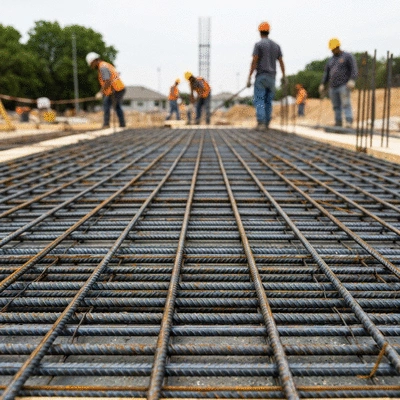
Concrete Slab Innovations is dedicated to advancing concrete slab construction through innovative aluminum formwork systems. Our mission is to provide contractors, engineers, and project managers with cutting-edge methods for safe and precise slab support.
Optimize your concrete slab projects by integrating modular aluminum formwork. Its lightweight design significantly cuts down on labor and setup time!
Enhance project efficiency by understanding the high-load capacity of modern aluminum systems. This ensures structural integrity and faster pour cycles!
Reduce material costs and waste by choosing reusable aluminum formwork. A sustainable choice that also boosts your bottom line!
Prioritize job site safety with robust aluminum formwork. Its stable design minimizes risks during the critical concrete pouring phase.
Streamline your project timelines. Modular aluminum formwork allows for quicker assembly and dismantling, speeding up overall construction.
Achieve consistent slab quality through precise formwork alignment. High-quality systems ensure accurate dimensions and a superior finish.
Educate your team on the benefits of innovative formwork. A knowledgeable crew is crucial for maximizing efficiency and safety.
Explore case studies of successful projects utilizing advanced formwork. Learn from real-world applications to inform your next build.
Consider the long-term economic advantages of investing in quality formwork systems. Durability means less replacement and better ROI.
Implement rigorous quality control checks during formwork setup. Precision at this stage prevents costly rework later.
Stay updated on the latest advancements in concrete technology and formwork. Continuous learning keeps your projects cutting-edge.
Consult with formwork specialists to tailor solutions to your specific project needs. Custom approaches yield optimized results.
Document your formwork processes for consistency and training. Standardized procedures improve efficiency and reduce errors.
Regular maintenance of your formwork equipment extends its lifespan and ensures reliable performance on every job.
Ready to elevate your concrete slab projects? Dive into our resources to discover how innovative formwork can transform your construction practices!