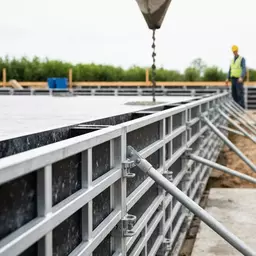
One-Way Slabs
Supported in one direction. Ideal for linear load transfer.
Choosing the right concrete slab type can significantly impact your project's success. Let's explore the essential insights that can guide your decision-making.
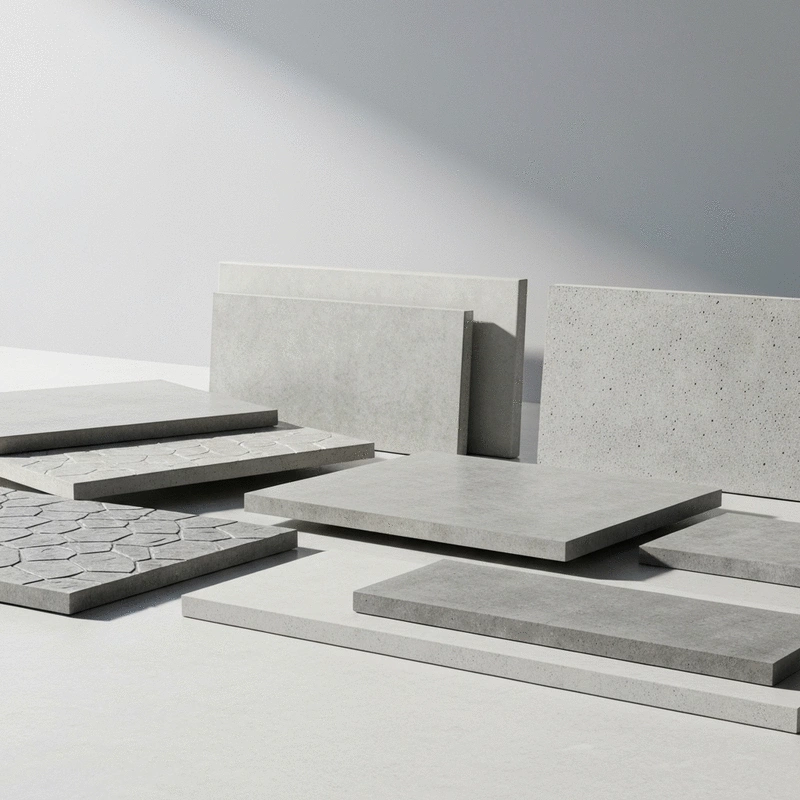
This visual summarizes various concrete slab types, highlighting their unique characteristics and ideal applications for informed project decisions.
Supported in one direction. Ideal for linear load transfer.
Supported on all sides. Distributes loads more evenly.
Grid pattern for enhanced strength and weight reduction.
Lightweight with hollow channels for reduced material use.
Simplifies design by eliminating beams, more flexible layouts.
High strength with reduced weight via integrated ribs.
Uses steel reinforcement for improved structural performance.
Manufactured off-site for rapid assembly and quality control.
Utilizes tensioning techniques to enhance load capacity.
Concrete slabs are the backbone of many construction projects, providing a solid foundation for structures. Understanding the various concrete slab types available is crucial for ensuring the success of your project. Whether you're a contractor, engineer, or project manager, having this knowledge can help you make informed decisions that meet both safety and design requirements!
So, what exactly are concrete slab types? They refer to the different designs and structural systems used in concrete flooring. Each type has unique characteristics that cater to specific needs in terms of strength, durability, and application. Let’s dive deeper into this topic to clarify why it's essential to choose the right type of slab for your project.
Concrete slab types can be broadly categorized based on their structural configuration and reinforcement methods. According to Wikipedia, concrete slabs are a common structural element of modern buildings. Here's a quick overview:
Each type serves a distinct purpose and is suited for specific applications, which makes it vital to consider your project's requirements when choosing a slab type.
Choosing the right concrete slab impacts not only the structural integrity of your project but also its overall cost and efficiency. An ill-suited slab can lead to costly repairs, safety issues, and project delays. For instance, if you need a slab that can support heavy loads, opting for a hollow core slab might be beneficial. Alternatively, a flat slab could simplify your design process.
Here are some factors to consider when making your selection:
By carefully evaluating these factors, you can select a concrete slab type that aligns with your project goals and enhances the overall quality of your build!
The strength and durability of concrete slabs are paramount, especially in heavy-use environments. Concrete is inherently strong, but its performance can be significantly influenced by the type of slab you choose. For example, reinforced concrete slabs provide enhanced load-bearing capabilities through the integration of steel, making them ideal for commercial buildings. For more detailed information on various floor slab types, you can refer to resources like the WBDG - Whole Building Design Guide.
In addition to strength, durability is critical for the longevity of your structure. The right slab can resist cracking and deterioration over time, ensuring that your investment is protected. To highlight, here are some essential properties of concrete slabs, as discussed by the American Concrete Institute, which emphasizes the importance of material quality and design:
By understanding these properties, you can make informed decisions about the right concrete slab to use for your project, ensuring that it meets both functional and safety standards. Are you ready to explore the various types of concrete slabs that could help elevate your construction practices?
Concrete slabs are primarily categorized by their structural configuration and reinforcement methods, including one-way, two-way, waffle, hollow core, flat, ribbed, reinforced, precast, and post-tensioned slabs.
Choosing the right concrete slab is crucial because it directly impacts the structural integrity, safety, cost-efficiency, and overall timelines of a construction project. An unsuitable slab can lead to significant issues and expenses.
Essential properties to consider include compressive strength (ability to withstand axial loads), flexural strength (resistance to bending), durability (resistance to environmental factors), and workability (ease of mixing and placing).
Common issues include cracking (due to temperature changes, drying shrinkage, or excessive loads), settlement (uneven support), and surface spalling (breakdown of the top layer, often from freeze-thaw cycles). Solutions range from crack filling and patching for minor damage to professional reinforcement for severe structural problems.
To prolong slab life, regular inspections for wear, sealing against moisture and chemicals, ensuring proper drainage, and avoiding excessive heavy loads are recommended. These practices help prevent deterioration and costly repairs.
What do you think about the various types of concrete slabs? Have you had experiences with any specific types that stood out in terms of performance or ease of installation? Share your thoughts below:
Proper maintenance of concrete slabs is essential to ensure their longevity and performance. Understanding common issues that may arise and knowing how to address them can save both time and money in the long run. Have you ever encountered a crack or uneven surface? Let’s dive into the challenges and solutions that can help you keep your slabs in top condition!
Concrete slabs are robust, but they aren't immune to problems. Here are some common issues you might face:
Addressing these issues promptly is vital. For instance, while minor cracks can often be sealed with appropriate fillers, more significant structural problems may require expert evaluation. Have a contingency plan in place to ensure quick responses to any slab-related issues!
To enhance the durability of your concrete slabs, regular maintenance is key. Here’s a list of practical tips to keep in mind:
Implementing these maintenance strategies can significantly prolong the life of your slabs. Remember, a little effort upfront can prevent major headaches down the road!
When you notice cracks or other damage, knowing how to fix them is crucial. Here are some effective repair methods:
Each repair method has its applications and should be chosen based on the severity of the damage. If you're unsure, it's always a good idea to reach out to someone like us at Concrete Slab Innovations for guidance on the best approach!
Here is a quick recap of the important points discussed in the article:
Aidan Cromwell is a seasoned construction professional and industry expert with a passion for innovative building solutions. With extensive experience in concrete slab construction and a deep understanding of modular formwork systems, Aidan strives to educate and empower contractors, engineers, and project managers. His insights are grounded in practical knowledge and a commitment to advancing construction efficiency and safety.