In the realm of construction, the foundation is key. When it comes to concrete slabs, understanding the nuances of thickness can mean the difference between a successful project and a costly failure. What aspects should you consider to ensure your concrete slab stands the test of time? Here’s a breakdown of essential insights.
Durability: Increased thickness enhances resistance against wear over time, prolonging the lifespan of the slab.
Cost Efficiency: Proper thickness reduces repair and maintenance costs, leading to long-term savings.
Type of Structure: Different buildings (residential, commercial, industrial) have varying thickness requirements based on their unique needs.
Soil Conditions: Soil type and stability significantly affect the necessary slab thickness to prevent cracking and settling.
Expert Consultation: Engaging with professionals is crucial for complex load requirements and navigating local building codes effectively.
Key Factors Influencing Concrete Slab Thickness
Concrete slab thickness is a critical design choice influenced by several key factors. Understanding these allows for tailored solutions that ensure structural integrity, durability, and cost-efficiency.
1. Type of Structure
Residential, commercial, industrial buildings.
Different uses require varied structural support.
2. Load Requirements
Anticipated live and dead loads.
Dictate the slab's necessary load-bearing capacity.
3. Soil Conditions
Stability and composition of underlying soil.
Poor conditions necessitate thicker slabs.
4. Environmental Factors
Frost lines, moisture levels, seismic activity.
These can significantly impact durability.
Understanding Concrete Slab Thickness: An Essential Element of Building Design
Concrete slab thickness is a crucial consideration in any construction project. It directly affects the structural integrity, load-bearing capacity, and overall performance of a building. As someone deeply invested in concrete slab construction through my work at Concrete Slab Innovations, I've seen firsthand how vital this aspect can be. Have you ever wondered how a slight variation in thickness could impact your project's success? Let’s explore this together!
Notably, the thickness of a concrete slab can influence many factors, from safety to cost-efficiency. Understanding these implications is essential for contractors, engineers, and project managers aiming to optimize their building designs. So, why does the thickness of concrete slabs matter so much? Let’s dive into the details!
Why Concrete Slab Thickness Matters for Construction Projects
The thickness of a concrete slab plays a pivotal role in ensuring structural stability and longevity. A well-designed slab can withstand stresses and loads, while an inadequate thickness can lead to cracking or even catastrophic failure. Here are some key reasons why this measurement is crucial:
Load Distribution: Thicker slabs can distribute weight more evenly, preventing localized failures.
Durability: Increased thickness often enhances the slab's resistance to wear and tear over time.
Cost Efficiency: Proper thickness can reduce the need for repairs and maintenance, ultimately saving money.
As we assess various projects, I often advise my clients to prioritize appropriate thickness. It’s not just about meeting codes; it’s about ensuring peace of mind for everyone involved. When you understand these principles, you set yourself up for success!
Key Factors Influencing Concrete Slab Thickness
Several factors influence the ideal thickness of concrete slabs, and recognizing them is essential for effective design. Here’s a breakdown of the most significant elements to consider:
Type of Structure: Residential, commercial, or industrial buildings have different requirements.
Load Requirements: The anticipated loads on the slab, including live loads and dead loads, dictate thickness.
Soil Conditions: The stability and composition of the soil beneath can significantly impact the necessary thickness.
Environmental Factors: Conditions such as frost lines, moisture levels, and seismic activity can also play a role.
By taking these factors into account, we can tailor the slab thickness to meet the specific needs of each project. It's all about adapting to the unique conditions we face!
Importance of Load-Bearing Capacity in Concrete Slabs
The load-bearing capacity of a concrete slab is directly tied to its thickness. Thicker slabs can support greater loads without compromising safety. For instance, in commercial and industrial applications, where heavy machinery is often used, we must ensure the slab is robust enough to handle the demands placed on it. Here’s why it’s important to prioritize load-bearing capacity:
Safety: A properly designed slab reduces the risk of structural failure during heavy use.
Longevity: Ensuring adequate thickness can extend the lifespan of the structure.
Regulatory Compliance: Meeting local building codes often hinges on proper load analysis, as detailed in resources like the Seattle Building Code, Chapter 19, which provides guidelines for concrete structures.
Being proactive about load-bearing considerations not only enhances safety but also builds credibility for your projects. Remember, a solid foundation leads to a strong reputation!
How Soil Conditions Affect Concrete Slab Thickness Decisions
Soil conditions are a critical factor in determining the appropriate thickness for concrete slabs. Poor soil conditions can lead to uneven settling, which increases the risk of cracking. Here are some soil-related considerations that should guide your thickness decisions:
Soil Type: Clay, sand, and rock have different load-bearing capacities and settlement characteristics.
Moisture Levels: High moisture content can weaken soil, necessitating thicker slabs.
Frost Depth: In colder climates, frost lines must be considered to prevent heaving.
At Concrete Slab Innovations, we emphasize the importance of soil analysis during the planning phase. Guidance from organizations like the USDA Natural Resources Conservation Service provides valuable insights into how soil conditions impact slab-on-ground designs. It’s vital to consider these impacts early on to avoid costly modifications later!
Pro Tip
When determining the optimal thickness for your concrete slab, consider using a combination of soil analysis and load calculations. This approach ensures that you not only meet the structural requirements but also adapt to the unique environmental conditions of your site. Engaging with a geotechnical engineer early in the process can provide valuable insights and help you avoid costly adjustments later on.
Final Thoughts on Concrete Slab Thickness for Your Projects
Choosing the right thickness for your concrete slab is not just a technical decision; it’s a strategic choice that impacts your entire project. At Concrete Slab Innovations, we believe in a balanced approach. This means considering not just the structural requirements, but also the economic implications and sustainability of your designs. Here are some key points to ponder when deciding on slab thickness:
Consult the building codes: Always refer to the latest IBC and ACI recommendations, as outlined in resources such as the UFC Floor Slabs for DOD Facilities, which provides comprehensive guidelines for floor slab design.
Assess load requirements: Understand how different loads will affect your slab design.
Evaluate soil conditions: Check the underlying soil type and its load-bearing capacity.
By keeping these factors in mind, you’ll make informed decisions that lead to safer, more efficient, and cost-effective outcomes for your projects!
Engagement with Professionals: When to Seek Expert Advice
In the world of concrete slab construction, there are times when expert advice makes all the difference. If you encounter complex conditions or unique project needs, don’t hesitate to reach out to professionals. Here are a few scenarios where expert input is invaluable:
Specialized load requirements: If your project involves heavy machinery or unusual load patterns, consulting an engineer is crucial.
Challenging soil conditions: Areas with poor soil quality may necessitate specialized solutions.
Code compliance: Navigating local building codes can be tricky; professionals can help ensure you meet all standards.
Remember, it’s always better to seek guidance than to guess. Your project’s success hinges on making the right decisions from the start!
Next Steps for Accurate Measurement and Design Implementation
Practical Resources for DIY Measurement and Testing
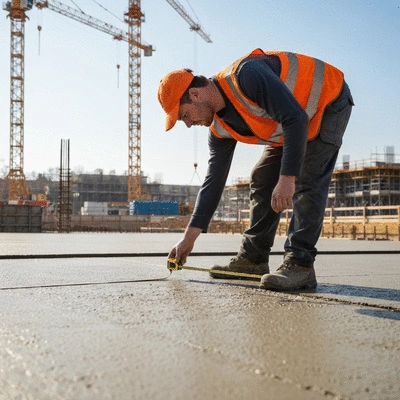
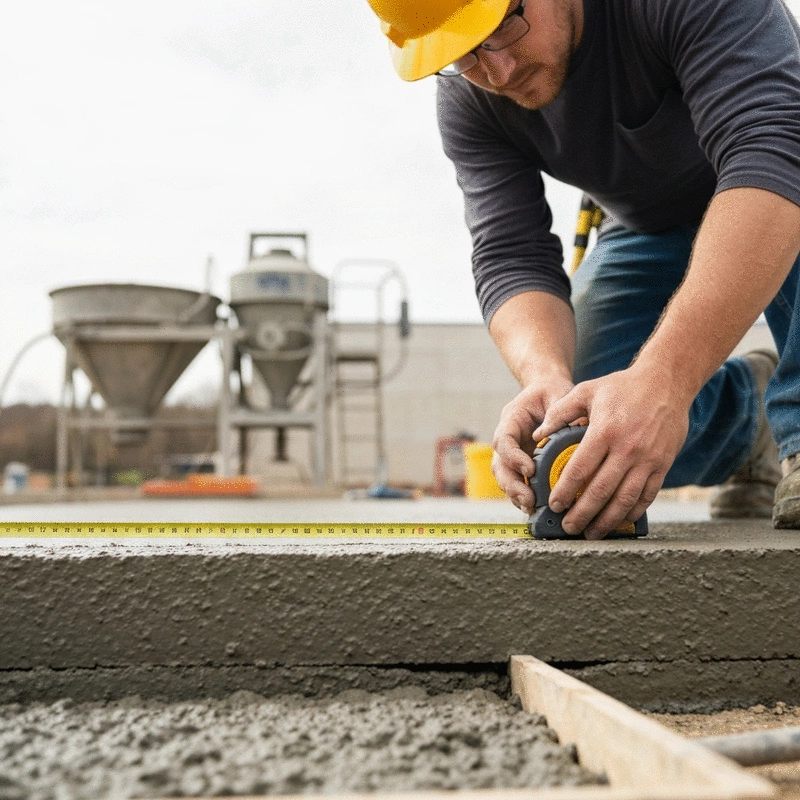
If you’re inclined to handle some measurements yourself, there are practical resources available to help you get accurate results. Here’s a quick rundown of useful tools and techniques you might consider:
Drilling method: A reliable option for obtaining precise thickness measurements.
Ground Penetrating Radar (GPR): This non-destructive method allows for thorough subsurface analysis.
Wire hook insertion: A straightforward approach for those who enjoy DIY projects.
These resources not only empower you but also build confidence as you take on your concrete slab projects!
Frequently Asked Questions About Concrete Slab Thickness
What is the primary purpose of considering concrete slab thickness?
The primary purpose is to ensure structural integrity, proper load distribution, and the long-term durability of the building while also achieving cost efficiency by reducing future repair and maintenance needs.
What are the key factors that influence concrete slab thickness?
Key factors include the type of structure (residential, commercial, industrial), anticipated load requirements (live and dead loads), underlying soil conditions (stability and composition), and environmental factors (frost lines, moisture levels, seismic activity).
Why is load-bearing capacity important for concrete slabs?
Load-bearing capacity is crucial for safety, ensuring the slab can support anticipated weights without failure. It also contributes to the longevity of the structure and helps achieve compliance with local building codes.
How do soil conditions impact slab thickness decisions?
Soil conditions significantly influence slab thickness because poor or unstable soil can lead to uneven settling and cracking. Factors like soil type, moisture levels, and frost depth must be analyzed to determine if a thicker slab or specialized foundation is necessary.
When should I consult professionals regarding concrete slab thickness?
It is advisable to consult professionals for projects involving specialized load requirements (e.g., heavy machinery), challenging soil conditions, or when navigating complex local building codes to ensure proper design and compliance.
Inviting Feedback and Experiences from Readers
I would love to hear about your experiences with concrete slab thickness! Have you faced challenges in measuring or deciding on slab specifications? Your insights could help fellow contractors and engineers learn from your successes and setbacks. Feel free to share your stories in the comments section!
Essential Considerations for Site Preparation and Concrete Placement
Finally, don’t overlook the critical aspects of site preparation and concrete placement. Ensuring a solid foundation for your slab is paramount. Here’s a checklist of essential considerations to keep in mind:
Site grading: Properly grade the site to avoid water pooling and ensure drainage.
Soil compaction: Compact the soil to provide a stable base for your slab.
Vapor barriers: Implement these to prevent moisture-related issues that can compromise your slab quality.
By attending to these details, you’ll set yourself up for a successful concrete slab project that stands the test of time!
Recap of Key Points
Concrete slab thickness is crucial for structural integrity and load-bearing capacity.
Thicker slabs enhance durability and can lead to cost savings by reducing maintenance needs.
Key factors influencing thickness include the type of structure, load requirements, and soil conditions.
Prioritizing load-bearing capacity is essential for safety and compliance with building codes.
Soil analysis should be conducted to avoid issues related to uneven settling and cracking.
Consulting building codes and professionals can provide critical insights for project success.
Aidan Cromwell
Aidan Cromwell is a seasoned construction professional and industry expert with a passion for innovative building solutions. With extensive experience in concrete slab construction and a deep understanding of modular formwork systems, Aidan strives to educate and empower contractors, engineers, and project managers. His insights are grounded in practical knowledge and a commitment to advancing construction efficiency and safety.
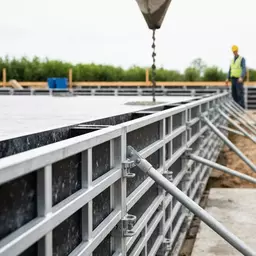
Concrete Slab Innovations is dedicated to advancing concrete slab construction through innovative aluminum formwork systems. Our mission is to provide contractors, engineers, and project managers with cutting-edge methods for safe and precise slab support.
Optimize your concrete slab projects by integrating modular aluminum formwork. Its lightweight design significantly cuts down on labor and setup time!
Enhance project efficiency by understanding the high-load capacity of modern aluminum systems. This ensures structural integrity and faster pour cycles!
Reduce material costs and waste by choosing reusable aluminum formwork. A sustainable choice that also boosts your bottom line!
Prioritize job site safety with robust aluminum formwork. Its stable design minimizes risks during the critical concrete pouring phase.
Streamline your project timelines. Modular aluminum formwork allows for quicker assembly and dismantling, speeding up overall construction.
Achieve consistent slab quality through precise formwork alignment. High-quality systems ensure accurate dimensions and a superior finish.
Educate your team on the benefits of innovative formwork. A knowledgeable crew is crucial for maximizing efficiency and safety.
Explore case studies of successful projects utilizing advanced formwork. Learn from real-world applications to inform your next build.
Consider the long-term economic advantages of investing in quality formwork systems. Durability means less replacement and better ROI.
Implement rigorous quality control checks during formwork setup. Precision at this stage prevents costly rework later.
Stay updated on the latest advancements in concrete technology and formwork. Continuous learning keeps your projects cutting-edge.
Consult with formwork specialists to tailor solutions to your specific project needs. Custom approaches yield optimized results.
Document your formwork processes for consistency and training. Standardized procedures improve efficiency and reduce errors.
Regular maintenance of your formwork equipment extends its lifespan and ensures reliable performance on every job.
Ready to elevate your concrete slab projects? Dive into our resources to discover how innovative formwork can transform your construction practices!