Dead Load
Permanent weight of the structure itself (beams, slabs, walls). Requires accurate assessment for reliable formwork design.
- • Constant weight
- • Structural materials
- • Minimizes excess material
Do you realize how crucial load management is in the construction industry? Mismanaging loads can lead to safety hazards and project failures. Understanding this concept is key to ensuring efficiency and integrity in your projects.
In construction, different load types require specific considerations for planning and execution. We categorize them primarily into Dead, Live, and Environmental loads, each presenting unique challenges for modular aluminum formwork.
Permanent weight of the structure itself (beams, slabs, walls). Requires accurate assessment for reliable formwork design.
Temporary weights like workers, equipment, or materials. Varies significantly by project phase.
External factors like wind, snow, and seismic activity. Crucial for long-term safety and performance.
Accurate calculations are the backbone of effective load management, ensuring formwork safety.
When we talk about modular aluminum formwork, one of the essential concepts to grasp is load management. Understanding how different types of loads affect your construction project can have a significant impact on both safety and efficiency. As I’ve seen in my career with Concrete Slab Innovations, proper load management not only ensures structural integrity but also enhances the overall success of a project.
So, what are the different loads we need to consider? Let’s break them down to get a clearer picture.
In construction, defining load types is crucial for planning and executing safe and successful projects. The three main types of loads we encounter are dead loads, live loads, and environmental loads. Each type presents unique challenges and considerations that we must account for.
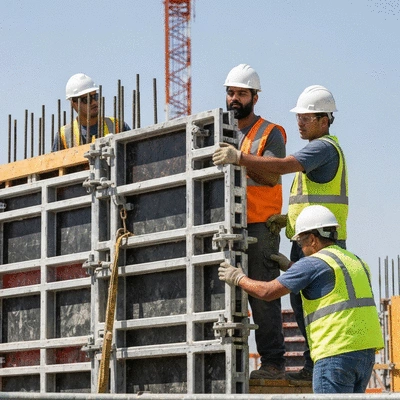
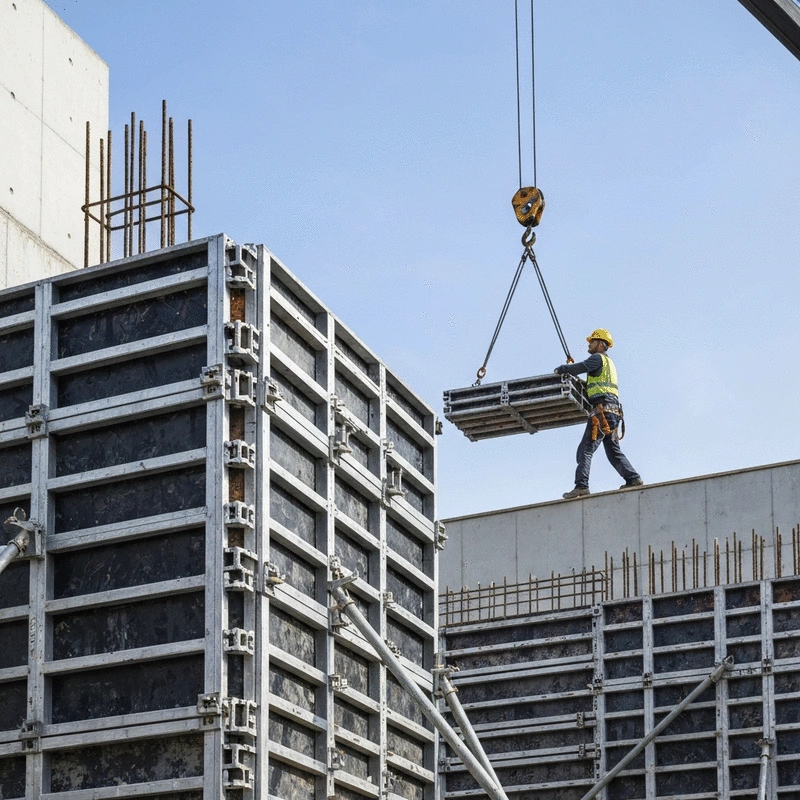
A dead load refers to the permanent weight of the structure itself, including materials like beams, slabs, and walls. It’s essential to accurately assess these loads since they remain constant throughout the life of the structure. Understanding the dead load allows us to design formwork systems that can reliably handle the weight without compromising safety.
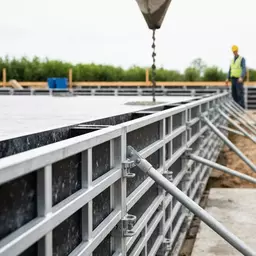
For example, in modular aluminum formwork, knowing the dead load helps determine how much support is needed. This kind of planning aids in minimizing excess material use, thus reducing costs. For further details on how various loads impact structural design, you can refer to this research on load analysis in construction.
Live loads, on the other hand, include any temporary weights that the structure may support, such as workers, equipment, or materials. These loads can vary significantly, depending on the type and phase of the project. Considering live loads is crucial for ensuring safety during construction.
By considering live loads carefully, we can design a more adaptable and robust formwork system that meets varying demands.
Environmental loads include factors such as wind, snow, and seismic activity that can impact the structural performance of a building. Understanding these loads is vital, especially in regions prone to severe weather or earthquakes.
By taking environmental loads into account, we can enhance the safety and longevity of our construction projects. For more insights on mitigating risks from environmental factors, this study on construction safety risks provides valuable information.
Accurate load calculations are the backbone of effective load management. They ensure that our formwork systems can handle the pressures placed upon them, which is key for maintaining safety and structural integrity. At Concrete Slab Innovations, we emphasize the significance of precise calculations in every project.
Let’s explore some methods and considerations for performing these calculations.
There are various methods for calculating loads, each suited to different project needs. Utilizing software tools can streamline this process, allowing you to visualize the load distribution across your structure.
Finding the right approach can lead to more accurate load management and improved project outcomes. This journal on formwork design and analysis offers further technical details on calculation methods.
Distributing loads effectively is vital for maintaining structural integrity. Improper load distribution can lead to failures and unsafe conditions. It’s crucial to ensure that loads are spread evenly across the formwork to prevent concentrated stress points.
Strategic planning in the design phase helps mitigate these risks, leading to safer construction practices.
When assessing load bearing capacity, several factors come into play, including the quality of materials and design features. Understanding these factors helps us make informed decisions about which formwork systems to use and how to implement them.
By focusing on these critical factors, we can develop more effective load management strategies that enhance project safety and efficiency.
Did you know? Implementing real-time load monitoring systems can greatly enhance your load management strategies. By continuously tracking the loads on your formwork, you can make immediate adjustments to ensure safety and efficiency throughout the construction process. This proactive approach not only minimizes risks but also optimizes resource allocation, ultimately leading to better project outcomes.
The three main types of loads are Dead Loads (permanent weight of the structure), Live Loads (temporary weights like workers and equipment), and Environmental Loads (factors such as wind, snow, and seismic activity).
Accurate load calculation is crucial because it ensures the formwork system can safely handle all anticipated pressures, preventing structural failures, maintaining integrity, and enhancing overall project safety and efficiency.
To ensure load capacity, regularly perform inspections and maintenance checks, evaluate material specifications for load capabilities, and consult with material specialists or structural engineers when in doubt.
When considering environmental loads, it's vital to evaluate local weather conditions, potential seismic activity, and design structures with adequate reinforcements to withstand these external factors.
Effective load management leads to enhanced safety, improved structural integrity, optimized resource allocation, reduced costs by minimizing excess material, and ultimately, more successful and efficient construction projects.
As we've explored, effective load management is crucial in the realm of modular aluminum formwork. By understanding the different types of loads and the importance of accurate calculations, construction professionals can significantly enhance project outcomes. Here’s a quick recap of the best practices we've discussed:
Incorporating these practices into your projects not only boosts efficiency but also enhances safety on the construction site. Remember, being proactive about load management leads to fewer complications down the line!
It’s natural to have questions regarding load management, especially when using innovative systems like aluminum formwork. Here are some common inquiries I often encounter:
By addressing these concerns, you can navigate the complexities of load management with greater confidence. At Concrete Slab Innovations, we’re here to help guide you through these challenges!
In conclusion, mastering load management in modular aluminum formwork is more than just a technical requirement—it's an opportunity to elevate your construction practices. Each project offers a chance to implement best practices that enhance both safety and efficiency. Wouldn’t it be amazing to finish your projects ahead of schedule while ensuring quality?
Are you ready to take your construction projects to the next level? Start by integrating the load management strategies we've discussed. Explore more about modular aluminum systems and their benefits on our website, Concrete Slab Innovations. Let’s work together to create safe, efficient, and high-quality buildings. Your next project awaits—let’s make it a success!
Here is a quick recap of the important points discussed in the article:
Aidan Cromwell is a seasoned construction professional and industry expert with a passion for innovative building solutions. With extensive experience in concrete slab construction and a deep understanding of modular formwork systems, Aidan strives to educate and empower contractors, engineers, and project managers. His insights are grounded in practical knowledge and a commitment to advancing construction efficiency and safety.