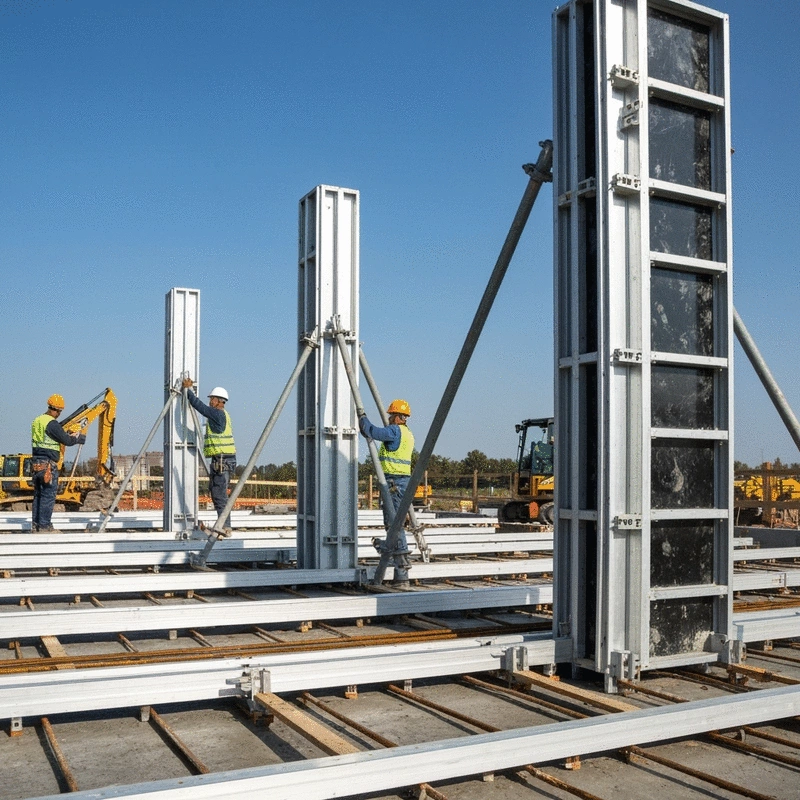
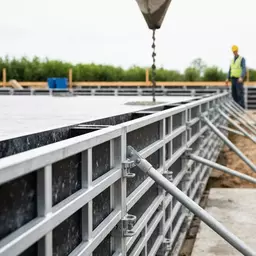
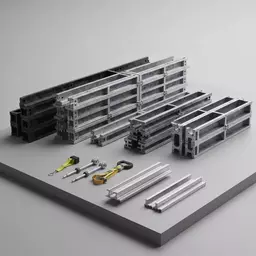
In an industry where efficiency is paramount, aluminum formwork stands out as a game-changer. With its lightweight and customizable design, it promises not just to streamline processes but to redefine how contractors and engineers approach concrete slab projects. Are you ready to discover the transformative impact of this innovative technology?
What You Will Learn
Aluminum formwork is a modular system that significantly reduces costs and enhances efficiency in concrete slab construction.
The lightweight nature of aluminum allows for faster assembly and disassembly, leading to quicker project completion.
Proper installation of aluminum formwork is crucial for ensuring structural integrity and preventing costly repairs.
Key considerations in formwork design include assessing project needs, site conditions, and load requirements.
Collaboration with suppliers can facilitate customized solutions and improve overall project outcomes.
Integrating technology such as BIM can enhance planning and decision-making processes in construction projects.
Understanding local building codes is essential for compliance and safety in formwork installations.
Why Aluminum Formwork is a Game Changer
Aluminum formwork significantly enhances efficiency and reduces costs in concrete slab construction. Below is a comparison of key benefits and considerations.
Efficiency & Cost Reduction
✓ Reduced labor costs due to easy handling and assembly.
✓ Faster assembly and disassembly for quicker project completion.
✓ Multiple reuses, significantly lowering cost per project.
✓ Lower environmental impact with reduced material waste.
Quality & Safety Advantages
★ Improved accuracy in the final structure due to precise dimensions.
★ Withstands high loads, ideal for large-scale projects.
★ Robust design minimizes risk of collapse, enhancing worker safety.
★ Reduces common issues like settling or misalignment with proper installation.
Installation & Engineering Focus
● Proper alignment and level checks are critical before pouring.
● All joints must be sealed to prevent leaks during concrete pouring.
● Structural engineering is vital for load requirement evaluation.
● Compliance with building codes and regulations is mandatory.
Strategic Planning & Technology
■ Assess project scope, timeline, and site conditions for optimal design.
■ Collaborate with suppliers for customized solutions and best practices.
■ Integrate BIM and project management software for enhanced planning.
■ Leverage mobile apps for on-site communication and updates.
Understanding Aluminum Formwork in Concrete Slab Construction
In the world of concrete slab construction, aluminum formwork has emerged as a revolutionary tool that enhances efficiency and reduces costs. But what exactly is aluminum formwork? At its core, it is a modular system made of lightweight yet durable aluminum panels that are designed to hold wet concrete in place until it cures. This system not only streamlines the construction process but also allows for precise and consistent slab shaping. As the founder of Concrete Slab Innovations, I can attest to the transformative effect this technology has had on our projects!
So, why is aluminum formwork increasingly being adopted by contractors and engineers? One major reason is its adaptability. It can be customized to fit various project dimensions, making it versatile for both small and large-scale constructions. Additionally, the formwork can be reused multiple times, significantly lowering the overall cost per project. Wouldn't you want to save both time and money while improving your construction outcomes?
What is Aluminum Formwork and Why is it Used?
Aluminum formwork is a modern construction technique that has changed how we approach concrete slab projects. Unlike traditional wood or steel formwork, aluminum systems are lightweight and easy to handle. This modular design allows for faster assembly and disassembly, which means you can complete projects more quickly and efficiently. Think about the impact this could have on your project timelines!
Reduced labor costs due to easy handling and assembly.
Improved accuracy in the final structure thanks to precise dimensions.
Lower environmental impact due to the ability to reuse the formwork multiple times.
Furthermore, aluminum formwork can withstand high loads, which makes it ideal for large-scale projects where heavy concrete is involved. This strength allows for a safer working environment, reducing the risk of accidents during the pouring process. For any contractor looking to elevate their game, exploring aluminum formwork should definitely be on your radar!
The Importance of Proper Installation in Concrete Slab Projects
Once you've decided to use aluminum formwork, the next crucial step is ensuring that it is properly installed. The success of your concrete slab largely hinges on this installation process. A well-set formwork provides the necessary support for the concrete and ensures that the final product meets all structural specifications. It's not just about following guidelines; it’s about achieving excellence on every project!
For detailed safety guidelines and best practices in formwork installation, you can refer to resources such as the Guide to Formwork from Safe Work Australia, which provides comprehensive information on planning, design, and execution of formwork to ensure workplace safety and structural integrity.
Check for alignment and level before pouring concrete.
Ensure all joints are sealed to prevent leaks during pouring.
Utilize proper bracing techniques to support the structure against the weight of the wet concrete.
Proper installation mitigates the risk of common issues like unexpected settling or misalignment, which can cause costly repairs down the line. Remember, investing time in this phase can save you a lot of headaches (and money) later!
The Role of Structural Engineering in Formwork Design
Every formwork system needs to be designed with structural integrity in mind—a realm where structural engineering plays a pivotal role. Engineers work closely with contractors to ensure that the design of the aluminum formwork meets both safety standards and project specifications. This collaboration is essential for creating formwork that can handle the stresses of concrete pouring.
For additional insights into industry standards and best practices for formwork construction, the Formwork Industry Guide from SafeWork SA offers valuable recommendations that can help in designing and implementing safe and effective formwork systems.
Evaluate load requirements based on project specifications.
Consider environmental factors that may affect the formwork's performance.
Incorporate safety measures into the design to protect workers during installation.
By prioritizing engineering input in the design phase, we can create a robust formwork system that not only meets the project’s needs but also enhances safety and efficiency. It’s a vital step in ensuring that your concrete slab is not just built, but built to last!
Pro Tip
To maximize the benefits of aluminum formwork, consider investing in training for your team. Understanding the intricacies of proper installation and customization can significantly enhance efficiency and safety on-site, leading to better project outcomes and reduced costs.
Strategic Planning and Design Considerations
When diving into aluminum formwork for concrete slab construction, it's essential to strategically plan and consider various factors to achieve optimal results. Each project has unique requirements that can significantly influence the formwork design. By assessing these needs early on, contractors and engineers can make informed decisions that set the foundation for success.
Here are some critical considerations to keep in mind when planning your formwork:
Project scope and timeline
Site conditions and accessibility
Load requirements and structural specifications
Material availability and supply chain logistics
By addressing these elements, you can ensure that your aluminum formwork installation aligns with your project goals while optimizing efficiency and safety.
Assessing Project Needs for Effective Formwork Design
Every construction project is different, which is why it's vital to assess your specific needs before settling on a formwork design. This step allows you to tailor the aluminum formwork to support the architectural vision while adhering to engineering requirements. Have you thought about how your project’s size, complexity, and intended use might influence your choices?
Consider the dimensions and load requirements.
Evaluate the architectural design and any unique features.
Analyze potential site constraints, such as space and access.
Taking the time to thoroughly understand these needs can lead to a more efficient installation process and a better overall outcome. Remember, aligning your design with project requirements is key!
Collaboration with Suppliers for Customized Solutions
Another critical aspect of effective formwork design is collaboration with suppliers. Building a strong relationship with your formwork provider can lead to customized solutions that meet specific project demands. Have you considered how a tailored approach can streamline your installation process and enhance your results?
Discuss project specifics openly with suppliers.
Request prototypes or demos to visualize the formwork system.
Seek advice on best practices for installation and maintenance.
By fostering collaboration, you’ll not only gain valuable insights but also ensure that you’re using the best materials for your unique project requirements.
Integrating Construction Technology for Enhanced Planning
In today’s digital age, integrating construction technology can significantly enhance your planning process. Tools like Building Information Modeling (BIM) and project management software can provide you with a virtual overview of your project, allowing for better decision-making. Have you explored how these technologies might add value to your formwork planning?
Utilize BIM to visualize formwork configurations.
Employ project management software to track timelines and budgets.
Consider using mobile apps for on-site communication and updates.
By leveraging technology, you’ll improve collaboration among your team and make your planning process more efficient, ultimately leading to higher-quality outcomes in your concrete slab projects.
Understanding Building Codes and Regulations Impacting Formwork
Lastly, it's crucial to have a solid understanding of the building codes and regulations that may affect your formwork installation. Each jurisdiction has its own set of requirements, and failing to comply can lead to costly delays or safety issues. Are you familiar with the local codes that influence your project?
For insights into how complex urban environments manage construction and safety, the NYC Department of Buildings provides comprehensive reports and guidelines on high-rise construction, including specific formwork regulations that are critical for compliance in densely populated areas.
Research local building codes for structural requirements.
Consult with local authorities or industry experts.
Ensure all materials and designs meet compliance standards.
Adhering to these guidelines not only enhances safety but also protects your investment in the project.
Frequently Asked Questions About Aluminum Formwork
What is aluminum formwork?
Aluminum formwork is a modular construction system made from lightweight aluminum panels used to hold wet concrete in place until it cures, ensuring precise and consistent slab shaping.
What are the main benefits of using aluminum formwork?
Key benefits include reduced labor costs, faster project completion due to quick assembly/disassembly, improved structural accuracy, multiple reuse potential, and lower environmental impact.
Why is proper installation critical for aluminum formwork?
Proper installation ensures structural integrity, prevents common issues like settling or misalignment, and minimizes the risk of costly repairs, ultimately contributing to the success and safety of the concrete slab project.
How does structural engineering contribute to formwork design?
Structural engineering is vital for evaluating load requirements, considering environmental factors, and incorporating safety measures into the formwork design, ensuring it can safely handle concrete pouring and meet project specifications.
How can technology enhance aluminum formwork planning?
Integrating technologies like Building Information Modeling (BIM) and project management software can provide virtual project overviews, improve decision-making, enhance collaboration, and streamline planning for more efficient and higher-quality outcomes.
Recap of Key Points
Here is a quick recap of the important points discussed in the article:
Aluminum formwork is a lightweight, modular system that enhances efficiency and reduces costs in concrete slab construction.
Proper installation is crucial for ensuring structural integrity; check alignment, seal joints, and use adequate bracing.
Collaboration with structural engineers and suppliers ensures custom solutions that meet project specifications.
Assess unique project needs early to optimize formwork design and installation.
Leverage construction technology like BIM for improved planning and project management.
Stay informed about local building codes and regulations to ensure compliance and avoid costly delays.
Aidan Cromwell
Aidan Cromwell is a seasoned construction professional and industry expert with a passion for innovative building solutions. With extensive experience in concrete slab construction and a deep understanding of modular formwork systems, Aidan strives to educate and empower contractors, engineers, and project managers. His insights are grounded in practical knowledge and a commitment to advancing construction efficiency and safety.
Concrete Slab Innovations is dedicated to advancing concrete slab construction through innovative aluminum formwork systems. Our mission is to provide contractors, engineers, and project managers with cutting-edge methods for safe and precise slab support.
Optimize your concrete slab projects by integrating modular aluminum formwork. Its lightweight design significantly cuts down on labor and setup time!
Enhance project efficiency by understanding the high-load capacity of modern aluminum systems. This ensures structural integrity and faster pour cycles!
Reduce material costs and waste by choosing reusable aluminum formwork. A sustainable choice that also boosts your bottom line!
Prioritize job site safety with robust aluminum formwork. Its stable design minimizes risks during the critical concrete pouring phase.
Streamline your project timelines. Modular aluminum formwork allows for quicker assembly and dismantling, speeding up overall construction.
Achieve consistent slab quality through precise formwork alignment. High-quality systems ensure accurate dimensions and a superior finish.
Educate your team on the benefits of innovative formwork. A knowledgeable crew is crucial for maximizing efficiency and safety.
Explore case studies of successful projects utilizing advanced formwork. Learn from real-world applications to inform your next build.
Consider the long-term economic advantages of investing in quality formwork systems. Durability means less replacement and better ROI.
Implement rigorous quality control checks during formwork setup. Precision at this stage prevents costly rework later.
Stay updated on the latest advancements in concrete technology and formwork. Continuous learning keeps your projects cutting-edge.
Consult with formwork specialists to tailor solutions to your specific project needs. Custom approaches yield optimized results.
Document your formwork processes for consistency and training. Standardized procedures improve efficiency and reduce errors.
Regular maintenance of your formwork equipment extends its lifespan and ensures reliable performance on every job.
Ready to elevate your concrete slab projects? Dive into our resources to discover how innovative formwork can transform your construction practices!