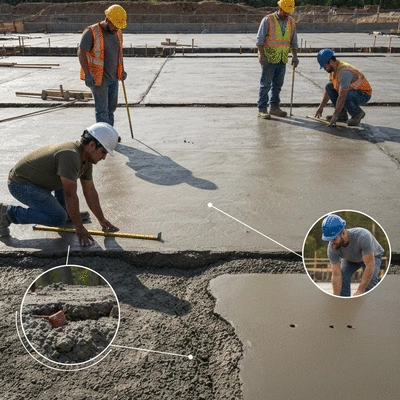
Factors Influencing Quality
- Material Selection (aggregates, cement, additives)
- Concrete Mix Design (water-cement ratio)
- Site Preparation (grading, drainage, compaction)
- Reinforcement (steel bars, fiber additives)
Did you know that the quality of industrial concrete slabs can make or break the success of a construction project? Understanding the factors that influence their strength and durability is crucial for any construction professional looking to optimize their results.
This visual highlights key factors influencing the quality of industrial concrete slabs, their typical lifespan, and common specifications.
Lifespan: 20-30 Years
(With regular maintenance)
Standard Thickness:
4-6 inches (load-dependent)
Reinforcement:
Steel bars or fiber additives
When it comes to construction, industrial concrete slabs play a pivotal role in various sectors. These slabs are specifically designed to support heavy loads, making them ideal for industrial applications. In this section, let's dive deeper into their characteristics and discover the many ways they can be utilized.
Industrial concrete slabs are thick, flat surfaces made from a mixture of cement, aggregates, and water. They are typically used in settings such as warehouses, factories, and distribution centers. The versatility of these slabs allows them to accommodate machinery, storage systems, and other vital industrial operations. According to the NRCS National Engineering Handbook, proper concrete specifications are crucial for ensuring structural integrity in such demanding environments.
With their durable nature, industrial concrete slabs ensure a robust foundation for both machinery and goods. The right slab can significantly enhance operational efficiency and safety in your facility!
One of the main advantages of industrial concrete slabs is their durability. These slabs can withstand heavy loads and resist wear, making them a long-lasting option for businesses. Additionally, they often require minimal maintenance, which translates to cost savings over time. The Federal Highway Administration highlights the importance of durable concrete in infrastructure projects, a principle that applies equally to industrial slabs.
Choosing industrial concrete slabs means investing in a solution that balances performance with economic sustainability. You’ll appreciate the long-term benefits as your projects progress smoothly!
The quality of an industrial concrete slab begins with the materials used in its composition. Selecting the right aggregates, ensuring high-grade cement, and incorporating effective additives can drastically improve slab performance. For instance, using a combination of fine and coarse aggregates can enhance the concrete's compressive strength.
The design of your concrete mix plays a critical role in determining the overall strength and durability of the slab. Factors such as water-to-cement ratio and the types of admixtures used can be tailored to meet specific project needs. Understanding these elements is crucial for achieving a slab that will stand the test of time.
Proper site preparation cannot be underestimated. This includes adequate grading, effective drainage solutions, and ensuring a stable base. Skipping or skimping on this step can lead to issues such as cracking or settling down the line. According to the Whole Building Design Guide, thorough site preparation is a fundamental requirement for the successful installation of floor slabs in facilities.
By investing time in site preparation, you set the stage for a successful and durable industrial concrete slab installation!
The lifespan of industrial concrete slabs typically ranges from 20 to 30 years, depending on factors like usage and maintenance practices. Regular inspections and timely repairs can significantly extend this lifespan by addressing wear and tear promptly.
Standard thickness for industrial concrete slabs often ranges from 4 to 6 inches, depending on the load requirements and industry regulations. Adhering to these standards ensures that your slab can handle the demands placed on it.
Reinforcements such as steel bars or fiber additives can greatly improve the structural integrity of concrete slabs. These reinforcements help to prevent cracking and enhance strength, making them essential for demanding industrial environments.
Industrial concrete slabs offer high load-bearing capacity, are cost-effective in the long run, resist weather and chemical exposure, and have low maintenance requirements, making them a durable and sustainable choice for industrial settings.
Common installation mistakes include inadequate site preparation, using poor water-to-cement ratios, neglecting expansion joints, and insufficient curing techniques. Avoiding these errors is crucial for the slab's longevity and performance.
Key standards include ACI 318 for structural concrete requirements, ASTM C94 for ready-mixed concrete quality, and local building codes that dictate specific thickness, reinforcement, and design parameters. Adhering to ISO standards can also provide useful guidelines.
The installation of industrial concrete slabs is a multi-phase process that begins with site preparation and ends with curing. Key phases include:
Taking care to execute each of these steps accurately will ensure that your slab performs as designed. It's worth paying attention to the details!
Curing is critical for achieving the desired strength and durability. Techniques such as water curing, covering with wet burlap, or applying curing compounds can maintain moisture levels effectively. This step helps your slab reach its full potential!
Even experienced contractors can overlook important aspects during installation. Common mistakes include:
Avoiding these pitfalls can lead to better long-term outcomes for your project. Let’s aim for success!
Installation costs can vary widely based on factors such as the size of the slab, location, and specific site conditions. Understanding these variables will help you anticipate project expenses and budget accordingly.
It's essential to consider potential maintenance costs when planning your budget. Regular upkeep will help avoid costly repairs down the line, ensuring your investment remains sound.
To enhance the longevity and performance of your industrial concrete slabs, consider incorporating fiber reinforcement into your mix. This not only improves tensile strength but also helps mitigate cracking, especially in environments subjected to heavy loads and dynamic stresses.
As we've explored throughout this article, industrial concrete slabs are not just foundational elements; they are vital components that ensure the efficiency and durability of various construction projects. The key benefits of these slabs, including their cost-effectiveness, low maintenance requirements, and impressive longevity, make them a go-to choice for contractors and engineers alike. By understanding their uses and benefits, you can better appreciate how they contribute to the overall success of a project.
Moreover, the factors that influence the quality of industrial concrete slabs—like material selection, mix design, and site preparation—underscore the importance of attention to detail in every phase of construction. Choosing the right slab is paramount to achieving desirable outcomes in strength and durability.
Equipped with the insights gathered here, it’s essential to apply this knowledge when planning your next project. Consider your specific needs and conditions before selecting concrete solutions. To assist with your decision-making, here are some key considerations:
By reviewing these elements, you can ensure that your choice aligns with your project objectives and contributes to its long-term success.
While having a solid understanding of industrial concrete slabs is crucial, engaging with professionals in the field can elevate your project even further. Consulting with experts, like those at Concrete Slab Innovations, can provide you with tailored solutions that address your unique project challenges. Here are some benefits of collaborating with experts:
Don’t underestimate the value of professional insights in optimizing your concrete slab projects!
Finally, it’s critical to understand the construction codes and standards that govern the design and installation of industrial concrete slabs. These regulations ensure safety, efficiency, and quality across all construction projects. Here are a few essential codes and standards to consider:
By familiarizing yourself with these standards, you can enhance compliance and ensure that your slab installations meet all required specifications, paving the way for successful project outcomes.
Here is a quick recap of the important points discussed in the article:
Aidan Cromwell is a seasoned construction professional and industry expert with a passion for innovative building solutions. With extensive experience in concrete slab construction and a deep understanding of modular formwork systems, Aidan strives to educate and empower contractors, engineers, and project managers. His insights are grounded in practical knowledge and a commitment to advancing construction efficiency and safety.