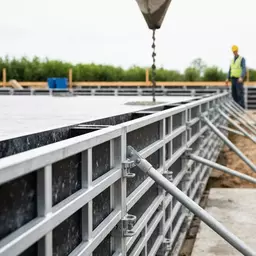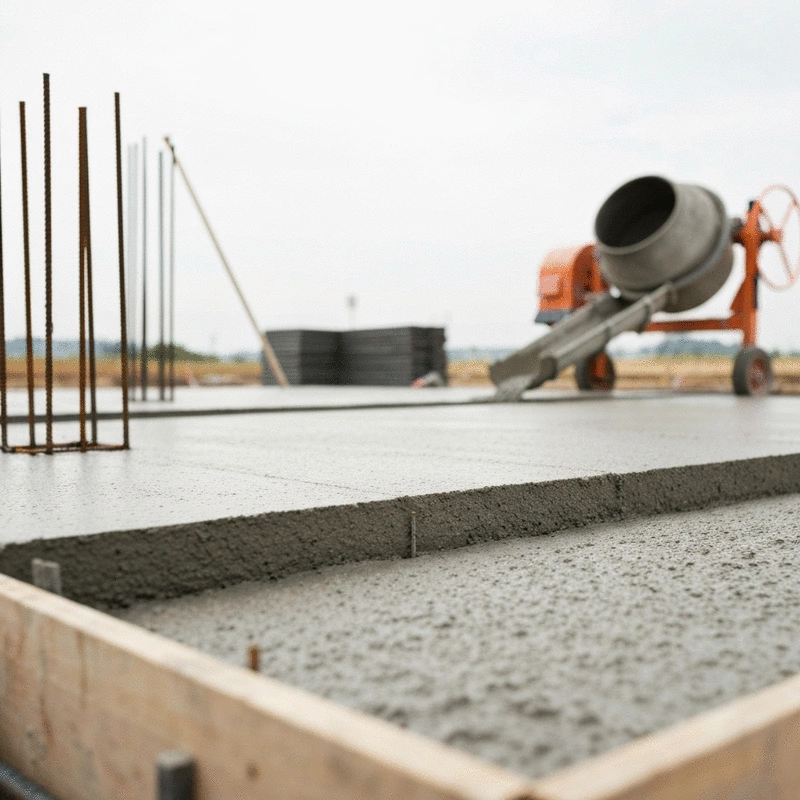
As you consider your next construction project, think about the advantages that understanding one-way concrete slabs can bring. These structural elements not only simplify the design process but also enhance efficiency and safety on-site.
What You Will Learn
Definition and Purpose: One-way slabs are designed to support loads primarily in one direction, making them ideal for floors and roofs.
Structural Behavior: Grasping the load transfer mechanisms and design principles is crucial for optimizing the performance of one-way slabs.
Types and Applications: Different slab types, such as solid slabs and joist slabs, serve specific purposes in various construction contexts.
Advantages and Disadvantages: While one-way slabs are cost-effective and quick to construct, attention must be paid to span ratios and loading conditions to ensure structural integrity.
Implementation Guidance: Conduct thorough analyses and collaborate with experts to effectively implement one-way slabs in your construction projects.
This visual summarizes the distinguishing features and common uses of one-way concrete slabs in construction.
Key Characteristics
Thickness: Generally thinner than two-way slabs.
Reinforcement: Primarily steel bars for tensile strength.
Span: Effective for 10 to 30 feet.
Primary Applications
Residential Buildings: Floors and roofs.
Commercial Structures: Various uniform load distribution.
Simplicity: Efficient load distribution and construction.
Implementation Guidance
Thorough Analysis: Assess load requirements and site conditions.
ACI Guidelines: Utilize ACI 318 standards for design.
Collaborate: Engage with expert engineers.
Design Considerations
Cost-Effective: Reduced construction time.
Structural Integrity: Attention to span ratios.
Performance: Optimize through load transfer mechanisms.
Understanding the One-Way Concrete Slab: Definition and Purpose
In the world of construction, understanding different slab types is essential for effective project management. A one-way concrete slab is a structural element that carries loads primarily in one direction. This design is particularly suited for situations where support beams are located only along one side of the slab, allowing for efficient load distribution and simplicity in construction.
One-way slabs are commonly utilized in various applications, from residential buildings to commercial structures. They offer a streamlined approach that not only enhances structural integrity but also speeds up the construction process. Have you ever considered how using a one-way slab might benefit your next project?
What is a One-Way Concrete Slab?
A one-way concrete slab is a flat concrete surface supported by beams on two opposite sides. This design allows the slab to deflect primarily in one direction, offering unique advantages in load-carrying capacity. The elements of a one-way slab play a crucial role in ensuring stability and strength during the pouring process.
Load Direction: Primarily designed to carry loads along one axis.
Support Placement: Typically supported by beams only on two adjacent sides.
Common Uses: Ideal for floors, roofs, and other structures needing uniform load distribution.
Understanding the definition of a one-way slab helps to set the foundation for more complex topics, such as design principles. Simplifying these concepts is key to effective communication among contractors, engineers, and project managers.
Key Characteristics of One-Way Slabs
When discussing one-way slabs, several key characteristics stand out. These attributes not only define their functionality but also determine their suitability for specific projects.
Thickness: Generally thinner than two-way slabs, allowing for lightweight construction.
Reinforcement: Typically reinforced with steel bars (rebar) to enhance tensile strength.
Span Limitations: Effective for spans typically ranging from 10 to 30 feet, depending on load requirements.
Each characteristic contributes to the efficiency of one-way slabs in various construction scenarios. By leveraging these properties, professionals can achieve improved cost-effectiveness and reduced construction time.
Exploring Structural Behavior and Design Principles
Understanding the structural behavior of one-way slabs is vital for effective design and execution. It’s not just about knowing what they are; it’s about grasping how they function within the broader context of building projects.
As we delve into the load transfer mechanisms and design considerations, I’ll share insights that I’ve gathered over years of experience in the construction industry. Exploring these principles can help you make informed decisions that lead to successful project outcomes.
Pro Tip
When planning your next project with one-way concrete slabs, consider incorporating advanced materials such as fiber-reinforced concrete. This innovative choice enhances durability and reduces the risk of cracking, ultimately leading to a longer lifespan for your structures. By adopting modern materials, you can ensure that your design choices not only meet current standards but also contribute to sustainability in construction.
Frequently Asked Questions About One-Way Concrete Slabs
What is the primary characteristic of a one-way concrete slab?
A one-way concrete slab is designed to carry loads primarily in one direction and is typically supported by beams on two opposite sides, allowing for unidirectional deflection.
What are the common applications for one-way concrete slabs?
One-way slabs are ideal for floors, roofs, and other structures in residential and commercial buildings that require uniform load distribution and efficient load transfer.
What are the typical span limitations for one-way concrete slabs?
One-way concrete slabs are generally effective for spans ranging from 10 to 30 feet, depending on the specific load requirements and design.
Why are ACI Guidelines important for one-way slab design?
How can engineers and builders ensure successful implementation of one-way slabs?
Successful implementation involves conducting thorough load and site analysis, adhering to ACI guidelines, and collaborating with expert engineers specializing in concrete slab design.
Summary of One-Way Concrete Slabs: Key Takeaways
As we wrap up our exploration of one-way concrete slabs, it’s important to recognize their versatility and efficiency in construction. These slabs offer a streamlined solution for various structural applications, particularly in residential and commercial buildings. Their design simplicity and load distribution capabilities make them a reliable choice for many projects!
In summary, here are the key takeaways about one-way concrete slabs:
Definition and Purpose: One-way slabs are primarily designed to support loads in one direction, making them ideal for floors and roofs.
Structural Behavior: Understanding load transfer mechanisms and design principles is crucial for optimizing performance.
Types and Applications: Solid slabs and joist slabs serve different purposes, with specific applications in narrow spaces and residential settings.
Advantages and Disadvantages: While they are cost-effective and quick to construct, attention must be paid to span ratios and loading conditions to ensure structural integrity.
By keeping these factors in mind, we can better appreciate how one-way slabs can enhance our construction projects and contribute to overall efficiency.
Next Steps for Engineers and Builders: Implementation Guidance
As engineers and builders, making informed decisions about concrete design choices is vital for the success of your projects. Moving forward, consider the following action steps to effectively implement one-way slabs in your work:
Conduct Thorough Analysis: Assess the load requirements and site conditions to determine the appropriate slab type and design.
Collaborate with Experts: Engage with engineers who specialize in one-way slabs to gain insights and practical solutions tailored to your specific project.
Taking these steps will not only improve your project outcomes but also enhance your reputation as a knowledgeable contractor or engineer in the field.
Encouraging Informed Decisions in Concrete Design Choices
Decisions made at the design phase directly impact the overall success of construction projects. One way to encourage informed choices is by conducting workshops or training sessions that cover the latest advancements in one-way slab construction. Sharing knowledge about materials, design principles, and best practices can empower your team and lead to better project results!
Additionally, consider integrating feedback mechanisms to learn from past projects. This continuous improvement approach will help refine your strategies for future endeavors.
Resources for Further Learning and Design Assistance
At Concrete Slab Innovations, we believe that education is key to advancing the concrete construction industry. Here are some valuable resources that can aid you in further learning and design assistance:
Industry Websites: Explore resources like the ACI (American Concrete Institute) for technical papers and updates. For detailed information on specific topics like floor slabs for concrete structures, authoritative guides are readily available.
Case Studies: Review successful project case studies that highlight innovative uses of one-way slabs. You can also find comprehensive information on floor slabs for DOD facilities, offering valuable insights into large-scale applications.
Online Courses: Consider enrolling in online courses that focus on advanced concrete design methodologies.
Taking advantage of these resources will not only enhance your skills but also position you as a leader in the field of concrete construction. Let’s continue to innovate and improve our practices together!
Utilizing Engineering Design and Construction Technology for Better Outcomes
Incorporating the latest technology in engineering design can significantly enhance the efficiency and quality of your projects. Tools like BIM (Building Information Modeling) and advanced software for structural analysis can provide you with insights that traditional methods may overlook. Additionally, embracing innovations in material sciences can lead to superior performance in one-way slab designs.
As we move forward, let's commit to utilizing these technologies and collaborating with industry leaders to ensure that our concrete solutions are not only effective but also sustainable and safe for the future.
Recap of Key Points
Here is a quick recap of the important points discussed in the article:
Definition and Purpose: One-way slabs are primarily designed to support loads in one direction, making them ideal for floors and roofs.
Structural Behavior: Understanding load transfer mechanisms and design principles is crucial for optimizing performance.
Types and Applications: Solid slabs and joist slabs serve different purposes, with specific applications in narrow spaces and residential settings.
Advantages and Disadvantages: While they are cost-effective and quick to construct, attention must be paid to span ratios and loading conditions to ensure structural integrity.
Aidan Cromwell
Aidan Cromwell is a seasoned construction professional and industry expert with a passion for innovative building solutions. With extensive experience in concrete slab construction and a deep understanding of modular formwork systems, Aidan strives to educate and empower contractors, engineers, and project managers. His insights are grounded in practical knowledge and a commitment to advancing construction efficiency and safety.
Concrete Slab Innovations is dedicated to advancing concrete slab construction through innovative aluminum formwork systems. Our mission is to provide contractors, engineers, and project managers with cutting-edge methods for safe and precise slab support.
Optimize your concrete slab projects by integrating modular aluminum formwork. Its lightweight design significantly cuts down on labor and setup time!
Enhance project efficiency by understanding the high-load capacity of modern aluminum systems. This ensures structural integrity and faster pour cycles!
Reduce material costs and waste by choosing reusable aluminum formwork. A sustainable choice that also boosts your bottom line!
Prioritize job site safety with robust aluminum formwork. Its stable design minimizes risks during the critical concrete pouring phase.
Streamline your project timelines. Modular aluminum formwork allows for quicker assembly and dismantling, speeding up overall construction.
Achieve consistent slab quality through precise formwork alignment. High-quality systems ensure accurate dimensions and a superior finish.
Educate your team on the benefits of innovative formwork. A knowledgeable crew is crucial for maximizing efficiency and safety.
Explore case studies of successful projects utilizing advanced formwork. Learn from real-world applications to inform your next build.
Consider the long-term economic advantages of investing in quality formwork systems. Durability means less replacement and better ROI.
Implement rigorous quality control checks during formwork setup. Precision at this stage prevents costly rework later.
Stay updated on the latest advancements in concrete technology and formwork. Continuous learning keeps your projects cutting-edge.
Consult with formwork specialists to tailor solutions to your specific project needs. Custom approaches yield optimized results.
Document your formwork processes for consistency and training. Standardized procedures improve efficiency and reduce errors.
Regular maintenance of your formwork equipment extends its lifespan and ensures reliable performance on every job.
Ready to elevate your concrete slab projects? Dive into our resources to discover how innovative formwork can transform your construction practices!